
Amflow has officially launched its first dedicated urban commuter e-bikes in the United States, bringing the high-torque Avinox M2 motor to a step-through carbon frame. The lineup opens on November 17, 2026, with two trims: the chain-driven Amflow UE Carbon at $3,499 and the belt-driven Amflow UE Carbon Pro at $3,899. Both models are available immediately through Amflow’s US store and authorized dealers.
Headlines around this launch focus on the 46-pound weight claim and 125 Nm of peak torque. Digging into the official US spec sheet reveals a different reality for commuters. That 46-pound number only applies after you strip off the racks, fenders, lights, kickstand, chain guard, and pedals. Ready to ride out of the box, both builds weigh 56 pounds.
US riders also face a different power ceiling than European launch coverage suggests. On American firmware with the standard 600 Wh battery, peak output is capped at 750 watts with a hard 20 mph motor cutoff. If you are comparing the UE against Amflow’s $3,899 TL Carbon SUV model, the full US numbers change the value math.
Amflow UE Carbon vs. Amflow UE Carbon Pro: US Pricing and Drivetrain Split
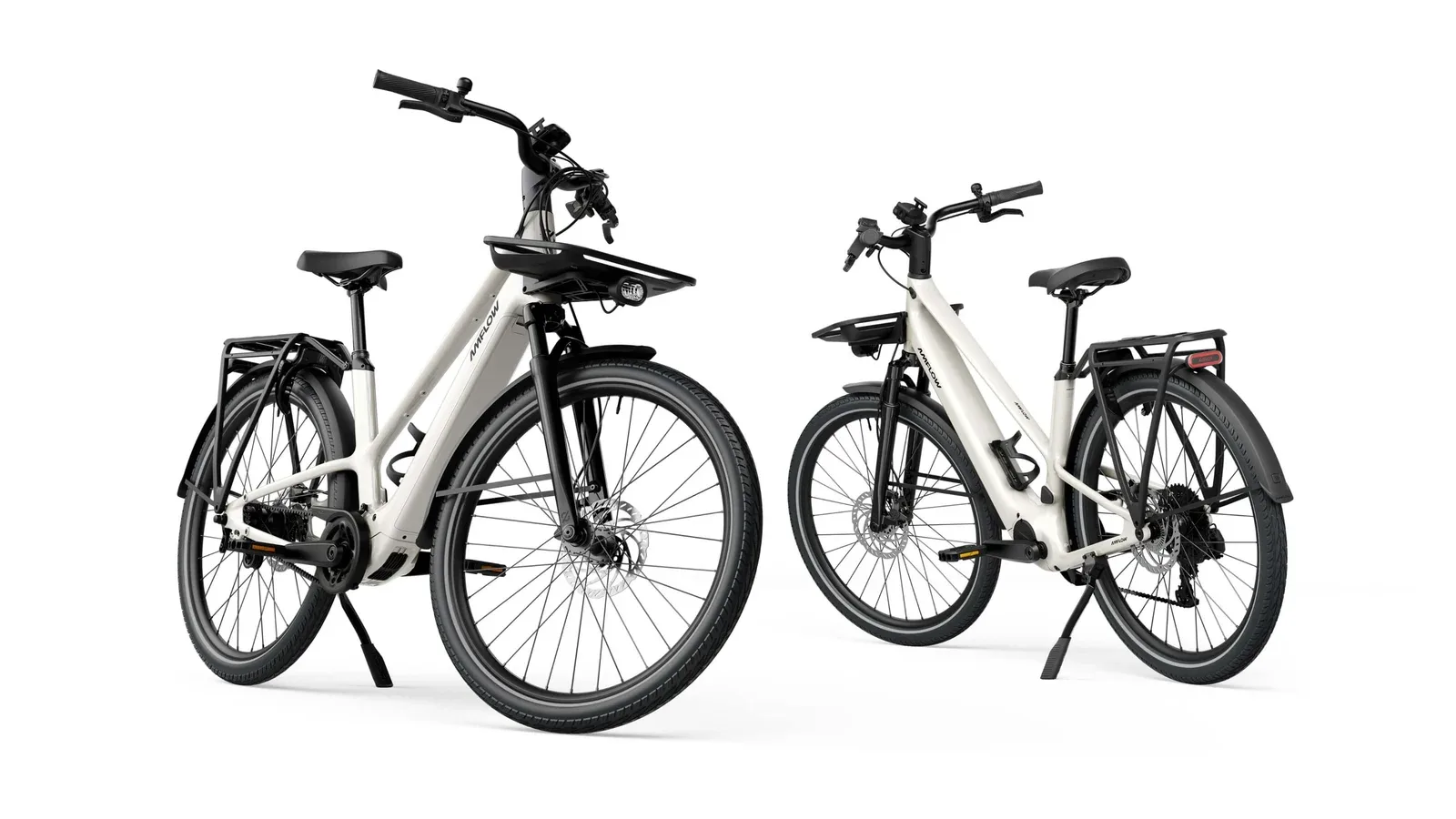
The $400 price gap between the two US trims comes down entirely to how they shift gears and transfer power to the rear wheel. Every other part on the bike stays identical. Both versions share the same 2.35 kg Lunar White carbon frame, Avinox M2 motor, 600 Wh battery, 65 mm fork, Magura brakes, racks, and smart cockpit.
At $3,499, the standard Amflow UE Carbon uses a 10-speed TRP E.A.S.I. wireless electronic rear derailleur paired with an 11–43T cassette and an Avinox eGlide chain. It supports SmoothShift, where the motor briefly nudges the chainring so gear changes land cleanly without pedal clunk. It also supports full Automatic Shifting based on your target cadence.
Spending $3,899 for the Amflow UE Carbon Pro swaps the derailleur and cassette for a Gates CDX 111T carbon belt drive and Amflow’s Electronic 3-Speed Internal Geared Hub. Belt commuters avoid chain lube stains and frequent chain replacements. Amflow recommends replacing a standard chain roughly every 621 miles. By contrast, the Pro belt drivetrain only needs a shop check every 3,106 miles.
I’d spend the extra $400 on the UE Carbon Pro if you commute year-round in wet weather or store the bike indoors where greasy chains get on pant legs. On the flip side, I’d stick with the $3,499 base model if you live in a hilly city. A 10-speed 11–43T cassette gives you finer gear steps and easier climbing ratios than a 3-speed hub. Amflow also notes the Pro hub can make an audible click or clunk when downshifting under heavy pedal load.
| Specification | Amflow UE Carbon | Amflow UE Carbon Pro | Amflow TL Carbon (SUV) |
|---|---|---|---|
| US List Price | $3,499 USD | $3,899 USD | $3,899 USD |
| Drive Unit & Torque | Avinox M2 (110 Nm / 125 Nm Boost) | Avinox M2 (110 Nm / 125 Nm Boost) | Avinox M2 (110 Nm / 125 Nm Boost) |
| US Power & Speed Cap | 250W rated / 750W peak, 20 mph | 250W rated / 750W peak, 20 mph | 250W rated / 750W peak, 20 mph |
| Drivetrain | TRP E.A.S.I. 10-speed electronic + chain | Gates CDX belt + 3-speed electronic IGH | TRP 10-speed derailleur + chain |
| Battery & Included Charger | 600 Wh removable, 168W charger | 600 Wh removable, 168W charger | 800 Wh removable, 168W charger |
| Weight (Stripped / Equipped) | 46 lb stripped / 56 lb equipped | 46 lb stripped / 56 lb equipped | 49.8 lb stripped / 56.3 lb equipped |
| Max Payload & Racks | 368 lb total (44 lb front / 59.5 lb rear) | 368 lb total (44 lb front / 59.5 lb rear) | 440 lb total (44 lb front / 59 lb rear) |
Avinox M2 Motor Output, US 20 mph Limit, and the 56 lb Weight Reality
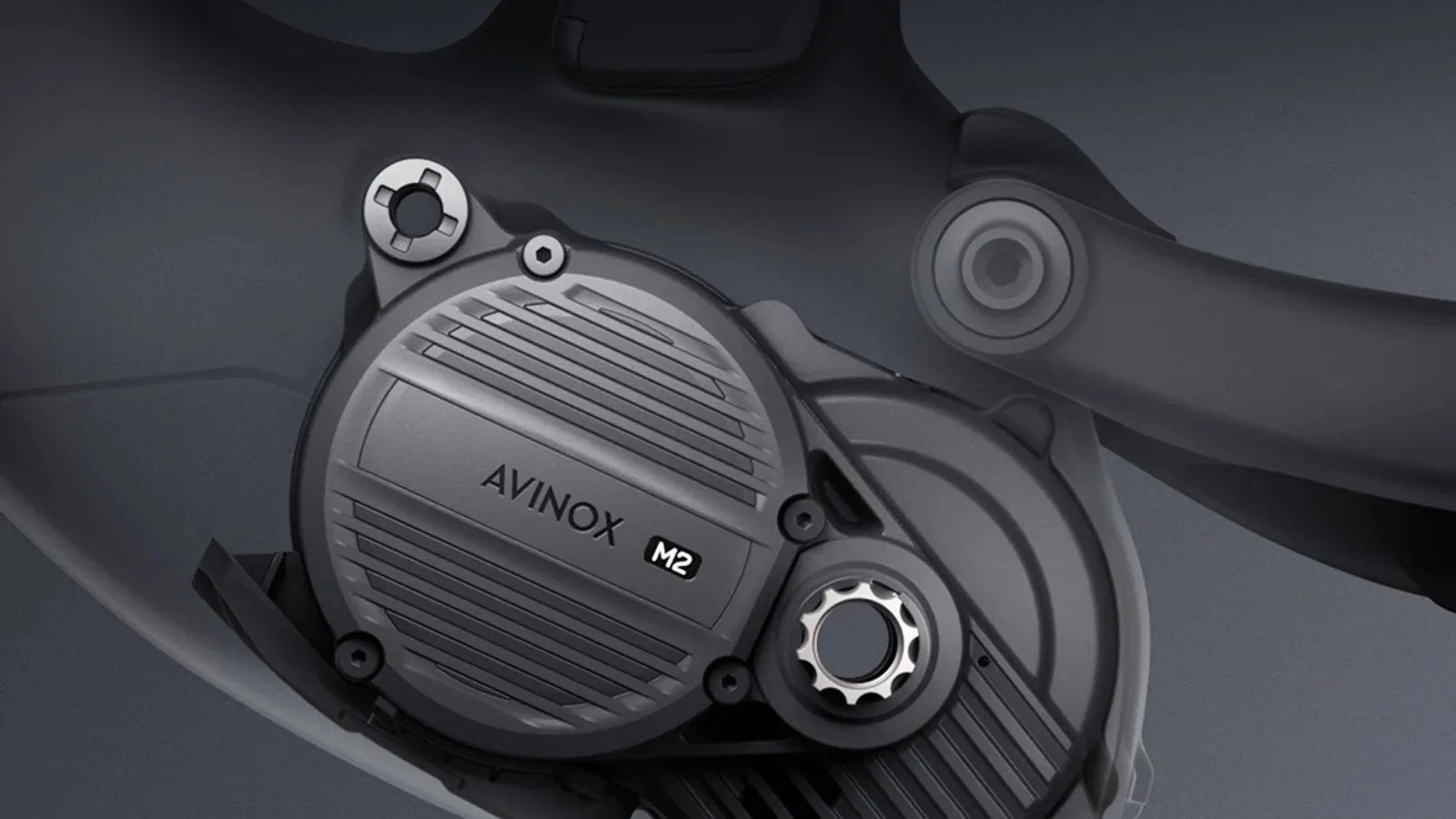
Amflow pairs the UE series with the Avinox M2 mid-drive unit, a 2.65 kg (5.8 lb) motor rated at 110 Nm of continuous torque and 125 Nm in Boost mode. It offers up to an 8x assist ratio and runs at roughly 45 dBA. Intelligent Traction Control System software also smooths out starts on slick pavement or steep 30 percent inclines.
Buyers reading global coverage should pay close attention to regional power differences. While international specs list the M2 at up to 1,100 watts peak, Amflow’s official US FAQ specifies 250 watts rated power and 750 watts maximum peak output when paired with the RS600 battery. Assistance cuts off at 20 mph in the United States, and Amflow locks that limit in firmware with no user option to reach 28 mph.
If you want to understand how this motor fits into the broader ecosystem, check our breakdown of the Avinox M2 vs. M2S drive units. You can also review our guide to US e-bike classes if you are deciding between a 20 mph bike and a 28 mph Class 3 model.
Weight is the other number worth checking closely before ordering. A 5.2-pound carbon frame sounds featherlight. Still, the factory-equipped bikes weigh 56 pounds once the racks, mudguards, integrated lights, kickstand, bottle cage, and chain guard are bolted on. Lifting 56 pounds up apartment stairs feels much closer to carrying an aluminum cruiser than a sub-40-pound lightweight commuter.
600 Wh Removable Battery, Range Claims, and the Charger Catch
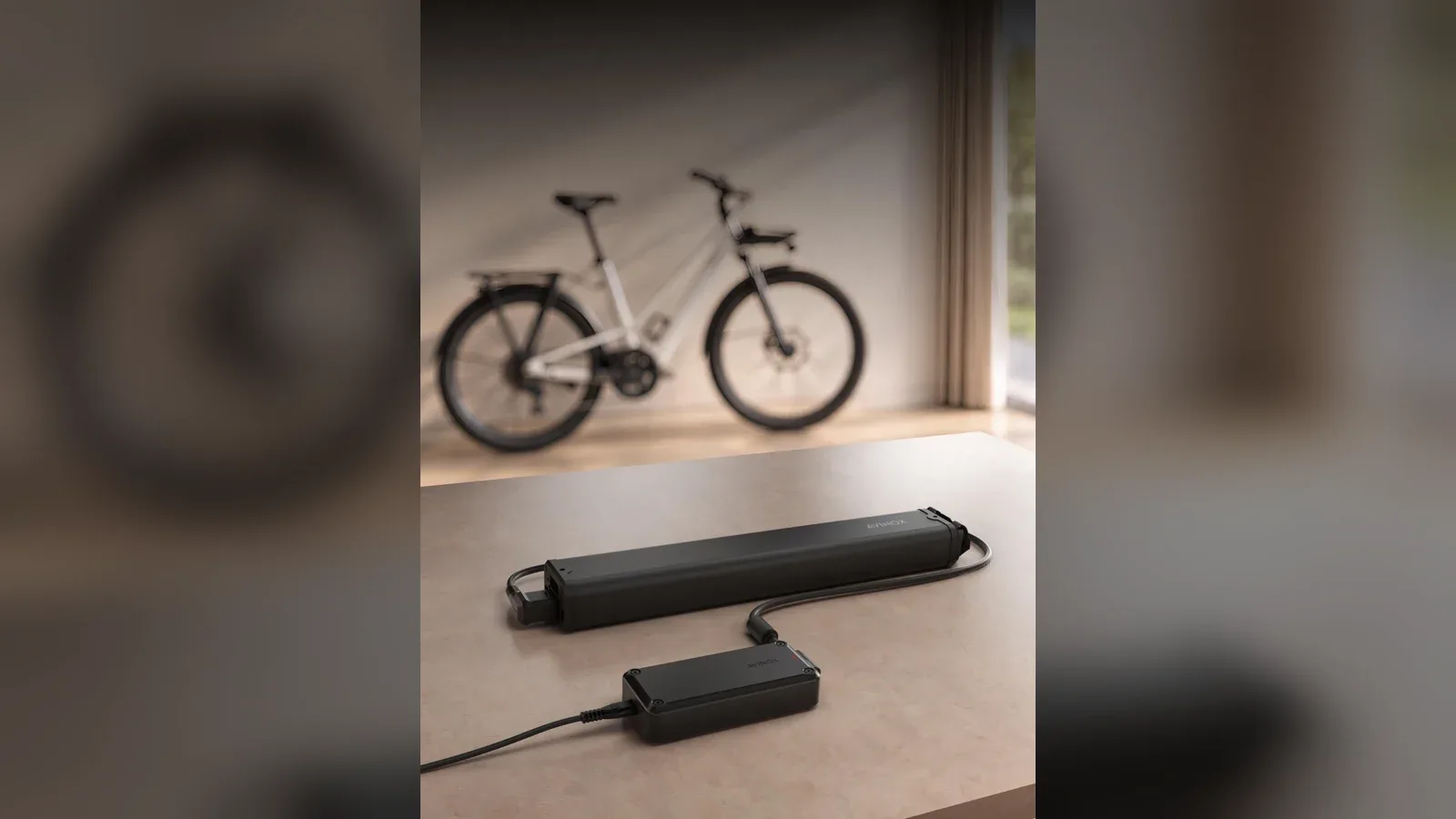
Both UE trims draw power from the removable 600 Wh Avinox RS600 battery housed inside the downtube. Amflow claims up to 82 miles per charge. That figure comes from flat paved testing with a 176-pound rider cruising at 13 mph in Eco mode. Expect closer to 30 to 50 real-world miles if you ride hilly streets in Auto or Turbo mode with cargo on the racks.
There is also a battery limitation you should know up front. Unlike the Amflow TL, the UE frame only accepts the 600 Wh RS600 pack. You cannot swap in the larger 800 Wh RS800 battery, and the UE does not support an external downtube range extender.
Charging speed has a similar catch. Promotional specs highlight a 2-hour 23-minute full charge, yet that speed requires buying the optional 508W fast charger separately. Inside the US retail box, Amflow includes the standard 168W charger. It takes 3 hours and 34 minutes to reach 80 percent and 4 hours and 36 minutes for a full 0 to 100 percent charge.
I wouldn’t rush to buy the 508W charger right away unless you run mid-day courier shifts. Charging overnight at home or during an eight-hour workday leaves plenty of headroom on the included 168W brick. Slower charging is also gentler on lithium cells over 500 cycles.
Urban Geometry, Suspension Comfort, and Smart Anti-Theft Gear
Instead of selling multiple frame sizes at launch, Amflow offers a single step-through regular frame built for riders from 5’1″ to 6’3″. Two interchangeable stems come in the box: a 0 mm short stem with 82.4 mm rise and a 21.8 mm long stem with 129.3 mm rise. Spacers and a 125 mm suspension dropper seatpost help dial in posture, and a smaller XS frame is slated to arrive later.
For bumpy city asphalt, the bike pairs a 65 mm Amflow Urban suspension fork with 26×2.0-inch Maxxis Overdrive reflective tires and Magura MT A2 hydraulic disc brakes using 180 mm rotors. Note that the fork lacks rebound adjustment and the wheels are not tubeless-compatible, so you will run standard inner tubes. Total load capacity reaches 368 pounds, covering a 264.5-pound rider plus 44 pounds on the front rack and 59.5 pounds on the MIK HD rear rack.
Amflow packs serious everyday tech into the cockpit and frame:
- Avinox DP200 Display and Mount: A 1.4-inch touchscreen integrates cleanly into the stem area alongside a phone mount offering 15W wireless charging or 20W USB-C wired charging.
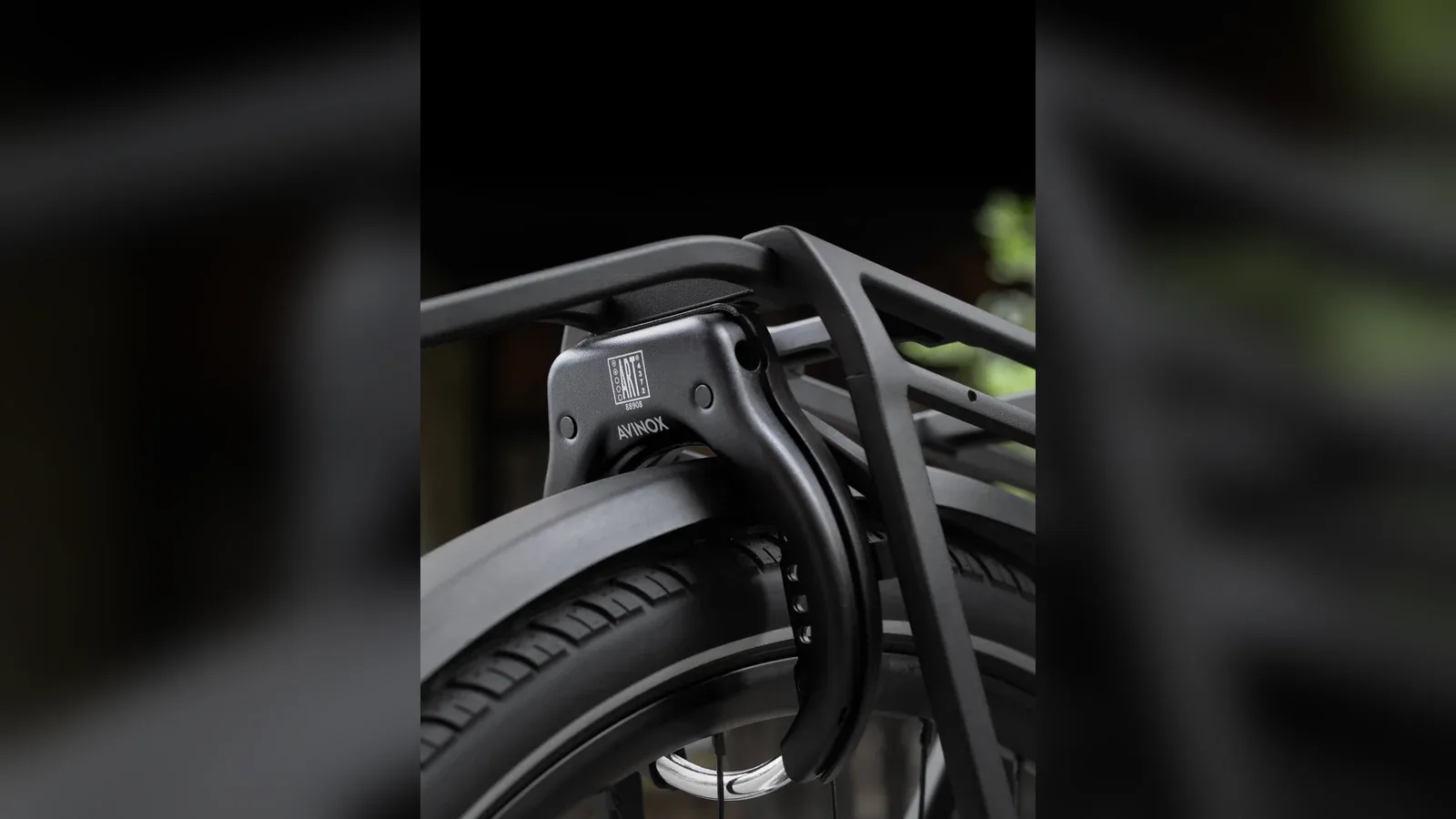
- Apple Watch and Security: Supports proximity bike access and heart-rate control with Apple Watch Series 7 or later (watchOS 11+, excluding SE models). It also includes Apple Find My tracking and an ART 2-Star frame lock keyed alike to the battery.
- 4G Alerts Catch: Remote movement notifications work over Bluetooth or 4G cellular, though 4G tracking requires inserting your own active SIM card into the bike.
- High-Output Lighting: An integrated front headlight pushes 500 lumens on low beam and 1,200 lumens on high beam, paired with a rear brake light.
Full component breakdowns and geometry charts are published on the Amflow UE specs page. Warranty coverage runs 5 years for the original owner on the carbon frame (2 years if resold), 2 years or 500 cycles on the drive unit and battery, and 1 year on included accessories.
How the Amflow UE Compares to the Amflow TL and Rival US Commuters
The oddest competition for the new UE Carbon Pro sits right inside Amflow’s own catalog. At $3,899, the UE Carbon Pro costs the exact same amount as the Amflow TL Carbon. For identical money, the TL adds full rear suspension, a larger 800 Wh battery, and a 440-pound total payload rating (meanwhile, buyers comparing $3,500–$4,500 commuters can also watch the ALSO TM-B e-bike delivery pause over charging software bugs) while weighing roughly the same 56.3 pounds fully equipped.
Choose the UE Carbon Pro over the TL only if you want a low step-through frame for easy mounting in street clothes and the clean upkeep of a Gates carbon belt. Riders wanting 28 mph Class 3 speed in this budget should cross-shop our picks for the best electric bikes under $4,000, where the Specialized Turbo Vado 4.0 and Priority Current Plus offer 28 mph assist and wide US shop support. You can also compare segment pricing in our 2026 electric bike price guide.
I’d also confirm dealer proximity before ordering any Amflow model online. Avinox service tools and electronic shifting parts are proprietary. Knowing whether a local shop within 30 minutes can diagnose the drive system matters just as much as torque numbers on paper.
Frequently Asked Questions
Can the Amflow UE Carbon reach 28 mph as a Class 3 e-bike in the US?
No. In the United States, Amflow locks the UE Carbon and UE Carbon Pro to a 20 mph motor cutoff with a 750W peak limit. Firmware restricts speed by region, and Amflow provides no way to raise the limit to 28 mph.
Why does the Amflow UE Carbon say 46 lb in ads but 56 lb in specs?
The 46-pound figure measures the bike stripped of its front and rear racks, fenders, lights, kickstand, chain guard, bottle cage, and pedals. Ready to ride in full US factory configuration, both models weigh 56 pounds.
Does the Amflow UE Carbon come with the 508W fast charger?
No. US buyers receive the 168W charger in the box, which takes 4 hours and 36 minutes for a full 0 to 100 percent charge. The 508W fast charger that cuts full charge time to 2 hours and 23 minutes is an optional purchase.
Should I buy the $3,499 UE Carbon or the $3,899 UE Carbon Pro?
Pick the $3,499 UE Carbon if you ride steep hills and want a wider 10-speed 11–43T gear range. Pick the $3,899 UE Carbon Pro if you commute in rain and want a clean Gates belt drive with minimal drivetrain upkeep.

