
Bicycling Land is reader-supported. When you buy through links on this page we may earn an affiliate commission, at no extra cost to you. As an Amazon Associate we earn from qualifying purchases.
There is no single federal e-bike age limit in the United States. In most states, a kid or teen can ride a 20 mph Class 1 or Class 2 e-bike at any age. By contrast, 28 mph Class 3 bikes usually require riders to be 16 or older, and several populous states enforce strict 15- or 16-year-old floors across every e-bike class.
Before buying an electric bike for a younger rider, I always check three layers of law: the bike’s class, the state minimum age, and any city or school-district bans. Getting even one of those wrong can turn a birthday gift into a garage ornament or a traffic citation.
The Short Answer by E-Bike Class
Federal law defines a low-speed electric bicycle for manufacturing and consumer-safety rules. It covers two- or three-wheeled cycles with operable pedals, a motor of 750 watts or less, and a motor-assisted top speed under 20 mph on flat ground. That federal rule governs what brands can sell as a bicycle, not who is old enough to ride on public streets.
Individual states set riding rules. Most follow the three-class framework summarized in our guide to e-bike classes. If you want the cleanest baseline rule of thumb, use the class breakdown below.
- Class 1 (pedal-assist up to 20 mph): Most states set no statewide age minimum. Exceptions include New York, Oregon, and Pennsylvania at 16, New Jersey at 15 with a license, Utah banning riders under 8, and Illinois moving to 15 on January 1, 2027.
- Class 2 (throttle up to 20 mph): Most states match their Class 1 age rules. However, Hawaii Act 259 requires adult supervision under 16 on Class 2 bikes, and many cities bar throttle bikes from multi-use paths.
- Class 3 (pedal-assist up to 28 mph): Almost every 3-class state sets a minimum age of 16. Texas, Georgia, and New Jersey set it at 15, Michigan sets it at 14, and states like Massachusetts and Pennsylvania do not recognize Class 3 as an e-bike.
Editor’s Note: Check City and School Rules Too
State law only sets the floor. Cities, county park boards, and local middle schools can pass stricter bans on riders under 12, 14, or 16, especially on paved greenways and school racks.
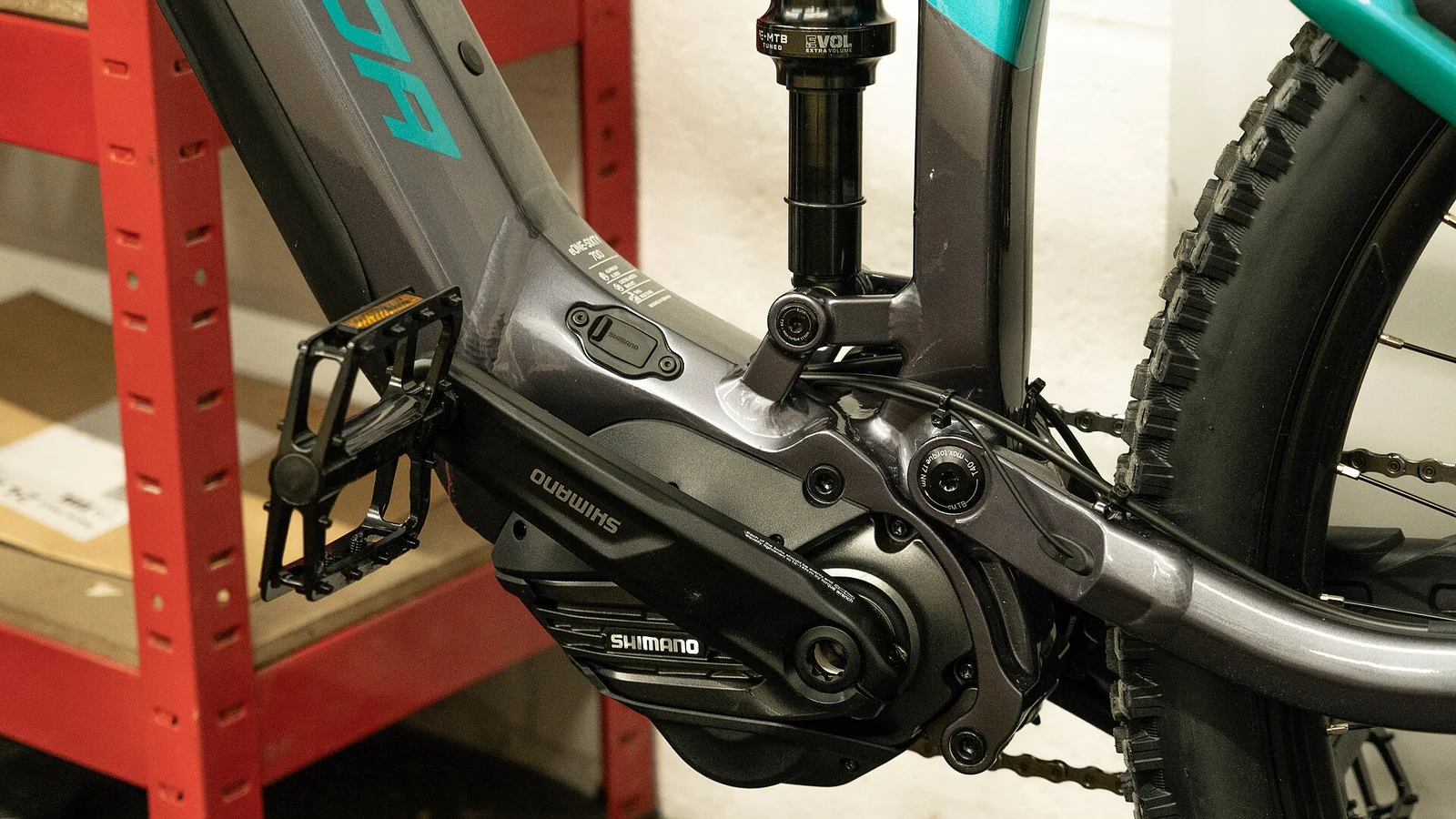
How E-Bike Age Requirements Compare Across US States
State legislatures tightened youth e-bike rules during 2026 as faster bikes and high-powered electric dirt bikes showed up outside middle and high schools. New Jersey moved every class under a licensing and registration system in July 2026. Hawaii adopted its Act 259 supervision rules in July 2026, and Illinois enacted Public Act 104-0854 to take effect on January 1, 2027.
To keep those thresholds clear at a glance, the chart below compares the minimum unsupervised operating age across the main US statutory models.
If your state is not in that quick summary, check our full state-by-state e-bike laws directory alongside the table below. Notice how helmet age rules frequently stay stricter than operating age rules even where young riders are allowed.
| State | Class 1 & 2 Min Age | Class 3 Min Age | Helmet & Licensing Catch |
|---|---|---|---|
| California | No state floor | 16 | Helmets required under 18 (all classes) and all ages on Class 3; some cities set local 12+ floors. |
| Colorado | No state floor | 16 | Helmets required under 18 on Class 3; no license or registration required. |
| Florida | No state floor | No state floor | Helmets required under 16; cities and counties can restrict ages (Miami requires 16+). |
| Georgia | No state floor | 15 | All Class 3 riders must wear a helmet; under 16 must wear helmets on bicycles. |
| Hawaii (Act 259) | Class 1: None; Class 2: 16 unsupervised | 16 unsupervised | Under 16 on Class 2 or 3 needs direct parent supervision; helmets under 18; county registration required. |
| Illinois (from Jan. 1, 2027) | 15 | 16 | All e-bikes banned on sidewalks statewide; bikes over 750W or 28 mph require motor-driven cycle licensing. |
| Massachusetts | No state floor | Not recognized (16+ moped) | 28 mph bikes default to motorized bicycles requiring a learner’s permit or license at 16+. |
| Michigan | No state floor | 14 | Helmets required under 18 on Class 3; pending bills could add Class 2 restrictions. |
| New Jersey | 15 | 15 (moped rules) | Mandatory NJMVC registration and e-bike or driver’s license; liability insurance required for throttle/28 mph bikes. |
| New York | 16 | 16 (NYC only, 25 mph cap) | Helmets mandatory at 16–17 on all classes and at all ages on Class 3. |
| Oregon | 16 | Not recognized | Minimum age 16 applies to all e-bikes; helmets mandatory under 16. |
| Pennsylvania | 16 | Not recognized | 20 mph motor limit, 100 lb max weight; no 28 mph e-bike category without motor-vehicle rules. |
| Texas | No state floor | 15 | No statewide helmet law, though major cities enforce local helmet ordinances for minors. |
| Utah | 8+ supervised; 14+ solo | 16 | Under 8 banned with motor engaged; helmets required under 21; police can impound minor violations. |
| Virginia | No state floor | 14+ (or 18+ supervision) | Class 3 helmets required at all ages; local governments set bicycle helmet rules up to age 14. |
| Washington | No state floor | 16 | No statewide helmet law, though several counties (including King County) require helmets locally. |
E-Bike Age Guide for 10-, 12-, 13-, and 15-Year-Olds
Parents rarely search for statute numbers. They want to know if their 12-year-old can ride to soccer practice or if a 14-year-old can commute to high school. Here is how US laws and bike sizing line up year by year.
Ages 8 to 11: Can a 10-Year-Old Ride an Electric Bike?
In states without a Class 1 age floor, a 10-year-old can ride a 20 mph Class 1 or Class 2 e-bike on public roads unless a local rule forbids it. Utah is much stricter. Riders under 8 cannot engage the motor on public property at all, and kids aged 8 to 13 must ride under direct adult supervision.
Law aside, I would keep almost any 10-year-old off a full-size adult e-bike. Most adult Class 1 and Class 2 bikes weigh 50 to 70 pounds, carry tall frames, and accelerate quickly. That weight and speed can overwhelm young hands on mechanical brakes. Stick to private property or dedicated youth electric balance bikes until a child has the frame fit and traffic judgment for 20 mph speeds.

Ages 12 and 13: Can a 12- or 13-Year-Old Ride an E-Bike?
A 12- or 13-year-old can ride a Class 1 or Class 2 e-bike without adult supervision in most 3-class states. That includes California, Texas, Florida, Colorado, and Washington. They cannot ride one on public roads in New York, New Jersey, Oregon, or Pennsylvania, and they lose statewide eligibility in Illinois on January 1, 2027.
Watch two traps at age 12 and 13:
- Local city caps: Even without a state age floor, city ordinances often step in. Some Southern California cities require riders to be at least 12, while Miami sets a 16-year-old floor for local riding corridors.
- Class 3 lockouts: A 12- or 13-year-old cannot ride a 28 mph Class 3 e-bike unsupervised in any standard 3-class state. Even in Virginia, riders under 14 on Class 3 bikes need direct supervision from an adult 18 or older.
If your 12- or 13-year-old lives in an eligible state and fits the frame, I’d choose a lighter Class 1 pedal-assist bike over a heavy throttle cruiser. Pedaling keeps speed predictable in neighborhood traffic and avoids local path bans aimed at throttles. You can compare age-appropriate frame weights and wheel sizes in our picks for kids and teens e-bikes.
Age 14: The Transition Year
Turning 14 unlocks solo riding in Utah for Class 1 and Class 2 bikes. It also meets the minimum age for Class 3 riding in Michigan and unsupervised Class 3 riding in Virginia. Elsewhere, 14-year-olds stay limited to Class 1 and Class 2 models.
Families in Illinois face an awkward timing quirk right now. Under Illinois’s 2027 e-bike law, a 14-year-old riding a Class 1 or Class 2 bike to school in late 2026 becomes ineligible on January 1, 2027. They will have to wait until their 15th birthday.
Ages 15 and 16+: Licensing, Class 3, and State Exceptions
Age 15 is the threshold for Class 3 e-bikes in Texas and Georgia, and it is the statewide floor in New Jersey’s e-bike licensing system. A 15-year-old in New Jersey cannot simply buy an e-bike and ride out the door. They must register the bike with the NJMVC, pass knowledge and vision tests for a permit, and finish a road test. Throttle and 28 mph bikes also require liability insurance.
Age 16 clears nearly every remaining e-bike barrier across the US. At 16, riders can operate Class 1 and Class 2 bikes in New York, Oregon, and Pennsylvania. They can also ride Class 2 and Class 3 bikes solo in Hawaii and Class 3 models in California, Colorado, Washington, Utah, and Illinois.
Why High-Powered E-Motos Break Every Age Rule
Most tickets, impounds, and school bans do not happen on 20 mph Class 1 commuter bikes. They happen because teens ride 1,000W to 3,000W electric dirt bikes and pit bikes on public streets. Models like Sur-Ron, Talaria, or pedal-less 50 mph machines do not count as e-bikes.
Once a two-wheeler exceeds 750 watts, lacks working pedals, or assists above 28 mph, it leaves the e-bike category under state law. Police classify it as a moped, motor-driven cycle, or off-highway motorcycle, as we detail in our e-bike vs. e-moto breakdown.
That classification carries serious penalties for minors and parents:
- Driver’s license and age 16+: Operating a motor-driven cycle or motorcycle on public streets requires a valid driver’s license or motorcycle endorsement. California requires an M1 or M2 license, and New Jersey requires a motorcycle license at age 17.
- Impoundment risk: Police can impound unregistered e-motos ridden by minors on streets, sidewalks, or bike trails. Both California’s updated e-bike and e-moto rules taking effect in 2027 and Illinois Public Act 104-0854 enforce this penalty.
- Zero bike-path access: Even an adult with a motorcycle license cannot ride an e-moto on paved multi-use trails or protected bike lanes.

Helmets, Passengers, and Local Rules Parents Miss
Minimum riding age is only half the compliance check when setting up a teen or pre-teen rider. Three practical rules trip up families every week:
- Helmets stay mandatory longer than age floors: Even where a 12-year-old can ride Class 1, California, New York, Hawaii, and many counties require helmets under 18. Utah mandates helmets under 21, and nearly every state requires helmets at any age on Class 3 bikes. Before picking a size, measure your child’s head and read our e-bike helmet guide.
- Passenger age differs from operator age: A 6-year-old cannot operate an e-bike in Utah or ride a Class 3 bike in Texas. However, most states allow younger children to ride as passengers in a proper rear child seat or cargo deck built for passengers. Many states still require helmets for every passenger under 16 or 18.
- School and trail rules override road expectations: School districts from Orange County, California to suburban Chicago routinely ban e-bikes on campus for students under 14 or require a safety sticker. State parks and federal land managers also limit singletrack trails to Class 1 pedal-assist bikes only, regardless of rider age.
If I were buying an e-bike for a rider under 16 today, I’d match three specs before checking paint colors. Look for a true 750W-or-less Class 1 setup with a UL 2849 label and hydraulic disc brakes with motor cut-off sensors. Then verify the frame sits low enough for both feet to touch flat at a stop.
Frequently Asked Questions
Can a 12-Year-Old Ride an Electric Bike on the Road?
In most 3-class states like California, Texas, Florida, Colorado, and Washington, yes. The bike must be a Class 1 or Class 2 model capped at 20 mph, and the city must allow it. A 12-year-old cannot ride an e-bike legally in New York, New Jersey, Oregon, or Pennsylvania, and cannot ride unsupervised in Utah.
How Old Do You Have to Be to Ride a Class 3 E-Bike?
Most states require riders to be at least 16 years old to operate a 28 mph Class 3 e-bike. Texas, Georgia, and New Jersey set the floor at 15, while Michigan sets it at 14. Virginia allows under-14 riders only with direct adult supervision, and Massachusetts and Pennsylvania do not recognize Class 3 as an e-bike.
Do You Need a Driver’s License to Ride an E-Bike?
In nearly every US state, you do not need a driver’s license for a street-legal Class 1, Class 2, or Class 3 e-bike under 750W. New Jersey is the major exception. Since July 2026, NJ riders need either a driver’s license (17+) or an NJMVC e-bike license (15+), plus registration. Any bike exceeding 750W or 28 mph falls under moped or motorcycle licensing rules in most states.
Are Shared E-Bikes Like Lime or Citi Bike Allowed for Teens?
No, rental fleets set contract age floors that are stricter than state bike laws. Major US bike-share networks like Lime, Bird, and Citi Bike require riders to be 18 or older under their terms of service, with limited 16+ guardian-consent programs. Those rental terms apply even in states with no e-bike age minimum.

