
Shopping for an e-bike right before Black Friday means sorting through dozens of listings that blur the line between street-legal bicycles and unlicensed electric motorcycles. A 1,500W throttle bike on sale can look identical to a Class 2 commuter online, yet riding it on a neighborhood bike path could bring a citation or an impoundment fee.
On November 23, 2026, nonprofit bike registry Bike Index launched its free E-Bike Rules Checker, giving US riders, parents, and buyers a single place to check how any e-bike is classified in their state without creating an account. If I were buying an e-bike for a teenager or commuting across city lines this week, I would run the exact model through this tool before checking out.
- Whether a model fits Class 1, Class 2, Class 3, or out-of-class e-moto rules in your state
- Minimum rider age, helmet mandates, and license or registration requirements
- Battery and electrical system UL 2849 or UL 2271 status where listed
- Custom lookup by wattage, throttle, and assist speed when a model is missing
- City sidewalk bans, park trail exclusions, and local age ordinances
- School district or college campus indoor charging and storage rules
- Recent bills passed at the city council level that take effect mid-year
- Whether an unlocked off-road mode voids your local bicycle classification
How the Free E-Bike Rules Checker Works
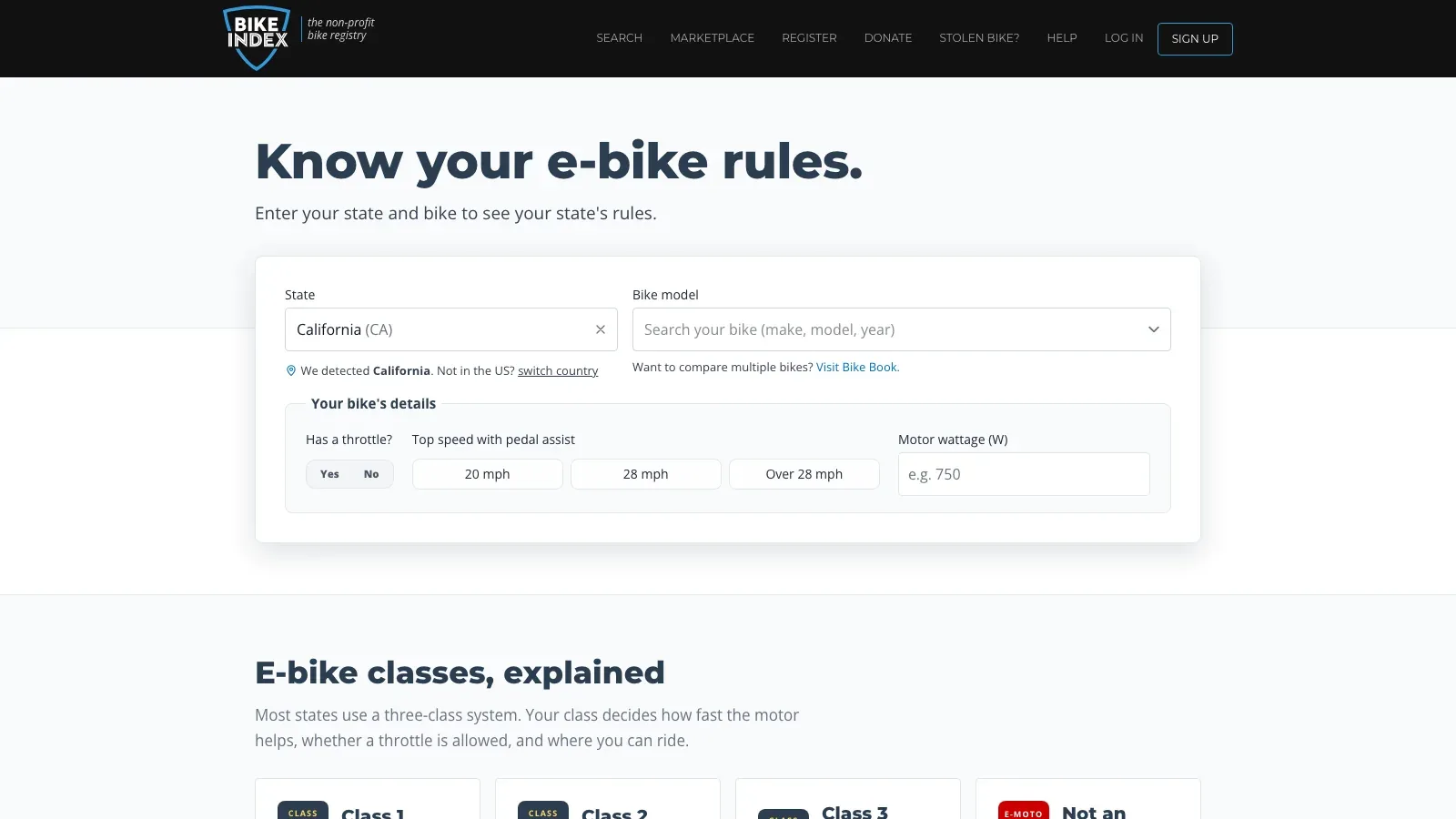
The tool lives at bikeindex.org/ebike-rules and covers all 50 US states plus Washington, D.C., alongside separate rule sets for Canada, the United Kingdom, Australia, and the European Union. You pick your state, type in a make and model, and get a plain-language breakdown of how local traffic statutes treat that machine.
Many direct-to-consumer brands sell models that are not yet indexed in Bike Index’s growing vehicle database. When that happens, you do not hit a dead end. The page opens four optional spec fields where you select whether the bike has a throttle, its throttle top speed (20 mph or over 20 mph), its pedal-assist top speed (20 mph, 28 mph, or over 28 mph), and its motor wattage.
That fallback matters because marketing copy frequently hides the legal cutoff behind peak wattage claims or “off-road mode” toggles. Entering the bike’s unlocked specs immediately flags whether your state considers it a legal bicycle or an out-of-class e-moto. If you are comparing models on paper, our e-bike classes guide breaks down how federal and state speed caps line up.
Why States Flag Bikes Above 750 Watts as E-Motos
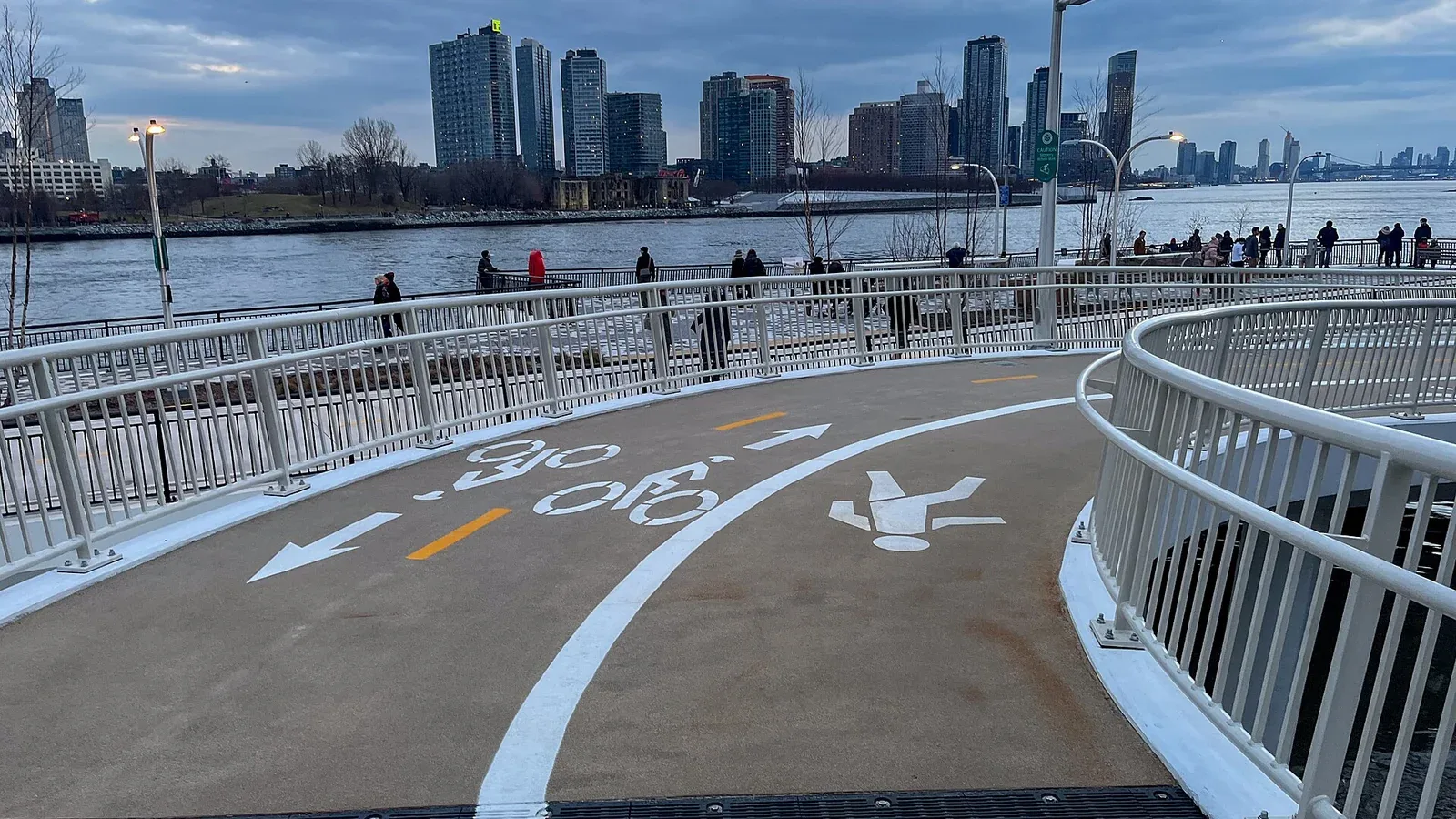
Across most of the country, state vehicle codes tie legal e-bike status to operable pedals, a motor capped at 750W, and assist cutoffs of 20 mph (Class 1 pedal-assist and Class 2 throttle) or 28 mph (Class 3 pedal-assist). Anything exceeding those thresholds lands in a separate legal bucket, such as a moped, motor-driven cycle, motorcycle, or off-highway electric motorcycle.
Bike Index’s Executive Director Craig Dalton noted that too many families purchase an e-bike without knowing what class it falls into or whether a child can legally ride it, leaving towns to deal with crashes and enforcement afterward. That gap gets sharper in 2027, when major state laws update their definitions and penalties.
| State | E-Bike Age & Class Rules | What Happens Over 750W or 28 mph |
|---|---|---|
| California | Class 3 requires age 16+ and a helmet for all riders. Starting Jan. 1, 2027, AB 2346 adds a 10 mph sidewalk limit, while SB 1167 expands the ban on modifiable bikes past 28 mph assist alongside SB 1271’s >750W rules. | Classified as a moped (up to 3,000W and 30 mph), motor-driven cycle, or motorcycle needing an M1/M2 license and plate; unlicensed >20 mph throttle bikes face 48-hour impoundment. |
| Illinois | Class 3 requires age 16+. Starting Jan. 1, 2027, SB 3484 requires riders to be 15+ for Class 1 and Class 2 bikes. | Starting Jan. 1, 2027, out-of-class bikes become motor-driven cycles needing a Class L or M license, title, plate, insurance, and FMVSS/VIN compliance, and are barred from bike paths and sidewalks. |
| New Jersey | P.L.2025, c.285 requires low-speed e-bike riders to be 15+, hold an MVC license, and display front-fork registration stickers. | Bikes over 750W and over 28 mph count as electric motorized bicycles (motorcycles) requiring age 17+, motorcycle license or endorsement, MVC title, registration, and insurance. |
| New York | Riders must be 16+. Class 1 and 2 cap at 20 mph; Class 3 allows throttle-assist up to 25 mph and is legal only in cities of 1M+ (NYC). | Seated bikes over 25 mph (or >750W) fall under Limited Use Motorcycle (up to 40 mph) or Motorcycle (>40 mph), needing registration and license. |
| Texas | Class 3 riders must be 15+. No statewide helmet rule or license for legal Class 1-3 models under 750W. | Out-of-class bikes capped at ≤30 mph and ≤5 bhp (~3,750W) count as mopeds (regular driver’s license); builds over 30 mph require a Class M motorcycle license, plate, and insurance. |
| Florida | No statewide minimum age, though riders under 16 need a helmet and cities can set local age or ID rules. | Pedaled builds ≤1,500W (2 bhp) and ≤30 mph are mopeds (driver’s license and plate); builds over 1,500W or 30 mph require FLHSMV title, plate, and motorcycle endorsement. |
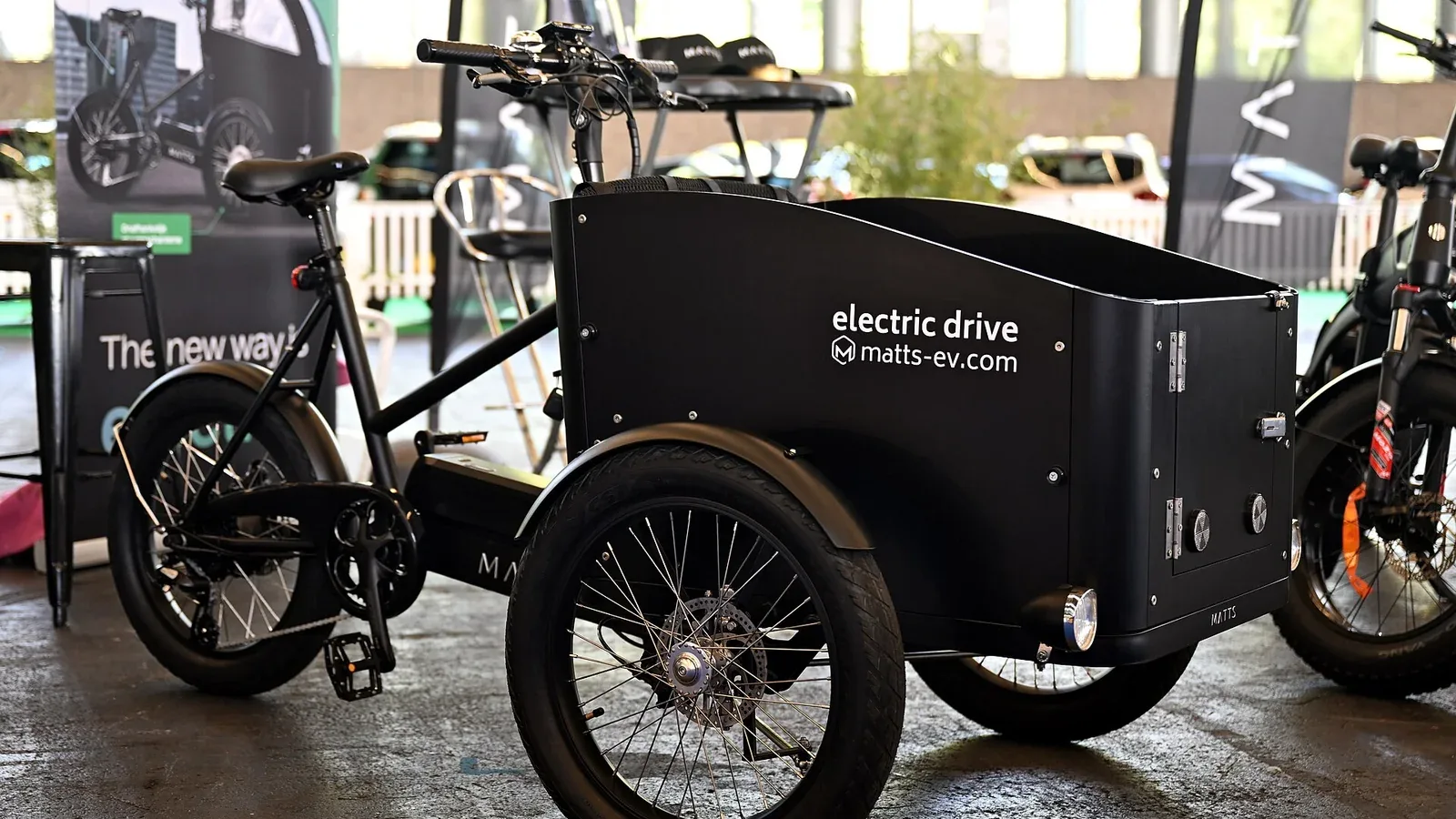
I like that the checker surfaces specific code sections alongside practical summaries. If you are shopping in California or Illinois, seeing California SB 1167 impound rules or Illinois SB 3484 age changes tied directly to a bike’s wattage prevents expensive surprises after delivery. For buyers weighing high-output frames, our 3000W e-bike street-legal guide breaks down exactly where motor-vehicle rules kick in.
UL Battery Certification and Parent Checklist
Beyond traffic statutes, Bike Index added UL safety checks and a six-step parent guide directly inside the tool. That pairing makes practical sense right now, especially as the U.S. Senate passed federal battery safety bill H.R. 973 on November 19, 2026, putting mandatory national lithium-ion standards on track.
The rules checker separates UL 2849 from UL 2271 in plain terms. UL 2849 tests the entire electrical system (battery, motor, charger, and controller working together), while UL 2271 covers the battery pack alone. More landlords, transit agencies, and college campuses now ask for proof of UL 2849 before letting an e-bike inside a building.
I still recommend checking the physical label on both the battery and the frame rather than trusting a product bullet list alone. You can walk through the exact label steps in our guide on how to check if your e-bike is UL 2849 certified. For parents shopping for younger riders, Bike Index recommends starting with a 20 mph Class 1 pedal-assist bike, checking state e-bike age limits first, and confirming a kid can already brake, signal, and ride a straight line on a regular bike before adding motor weight.
Mandatory Rider Education and Bike Book for 2027
The public lookup tool is only half of this update. Starting now, anyone who registers an e-bike on Bike Index goes through a three-step E-Vehicle Acknowledgment flow before completing registration. It covers frame class stickers, the 750W and 28 mph legal boundary (including unlocked off-road modes), longer braking distances, and helmet rules.
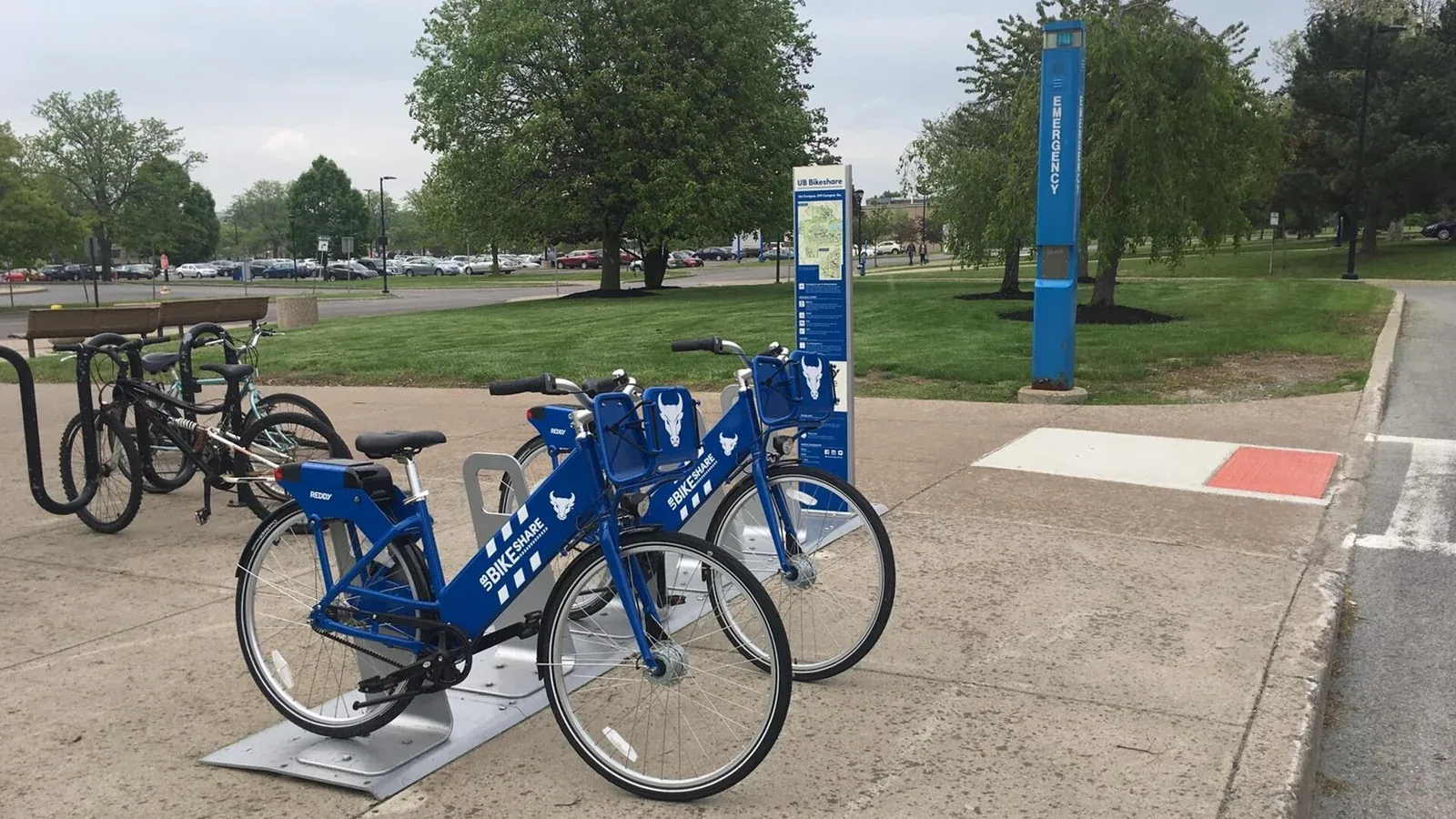
Cities, school districts, and universities that join Bike Index’s partner program for communities can customize that onboarding flow with local ordinances, restricted paths, and campus parking policies. City staff can view each registered bike’s class, battery certification, and signed rider acknowledgment in one dashboard alongside Bike Index’s stolen-bike serial lookup.
Founded as a 501(c)(3) nonprofit in 2013, Bike Index now tracks more than 1.86 million registered bicycles across 1,870 partner organizations and 100+ law enforcement agencies, helping return over $39 million in stolen bikes. Next year, the organization plans to launch its underlying open vehicle database publicly under the name “Bike Book” and wire class, state law, and rider education directly into every new e-bike registration.
What Shoppers and Current Owners Should Do Next
If you already own an e-bike, take two minutes to pull up your frame serial number and register it while running your model through the checker. If your bike has a throttle or programmable controller that can push past 20 mph on throttle alone or 28 mph on pedal assist, check our state-by-state e-bike laws tracker before riding on multi-use paths.
If you are buying a gift this holiday season, screenshot the model’s Bike Index result (motor wattage, class, and UL listing) before placing the order. A $999 flash sale loses its appeal fast if local police treat the bike as an unregistered moped that cannot leave private property.
Frequently Asked Questions
Do I Need a Bike Index Account to Use the E-Bike Rules Checker?
No. The lookup tool at bikeindex.org/ebike-rules is free and works without logging in or creating an account. You only need an account if you choose to register your bike’s serial number for theft recovery.
What If My E-Bike Brand or Model Is Not Listed in the Database?
Select the custom values option on the page and enter four details: whether the bike has a throttle, throttle top speed, pedal-assist top speed, and motor wattage. The tool will calculate its legal class and applicable state rules from those specs.
Does the Checker Replace City or School Campus E-Bike Rules?
No. The checker summarizes statewide statutes and major statutory updates, while cities, counties, parks, and schools often set stricter sidewalk, path speed, or age rules. Always check municipal and campus policies where you plan to ride.
When Will the Full Bike Book Database and Integrated Registration Go Live?
Bike Index plans to launch Bike Book broadly and embed automatic class detection and state law prompts directly into the bike registration process in 2027.

