
Bicycling Land is reader-supported. When you buy through links on this page we may earn an affiliate commission, at no extra cost to you. As an Amazon Associate we earn from qualifying purchases.
Most riders guess their bike helmet size from a T-shirt label and end up with a shell that wobbles over their eyes or squeezes their temples after twenty minutes. Taking thirty seconds with a flexible tape measure gives you an exact centimeter number you can trust across every major helmet brand.
That measurement matters even more for parents replacing a recalled kids’ lid, such as in the Cipton CPSK300CC youth small helmet recall, because a one-centimeter difference often separates a Youth Small from a Youth Medium or an Adult S/M.
Universal Bike Helmet Size Chart
Use the chart below as your starting baseline before checking a specific brand’s box. Adult sizing generally runs from 51 cm up to 65 cm, while toddler and youth helmets cover 45 cm to 55 cm.
| Helmet Size | Centimeters (cm) | Inches (in) | US Hat Size | Typical Rider Age / Group |
|---|---|---|---|---|
| Infant / Toddler | 45–50 cm | 17.75–19.75 in | 5⅝–6¼ | Ages 1–3 (balance bikes, trailers) |
| Child / Youth XS | 48–52 cm | 18.9–20.5 in | 6–6½ | Ages 3–6 (first pedal bikes) |
| Youth Small / Junior | 50–55 cm | 19.7–21.65 in | 6¼–6⅞ | Ages 5–11 (16″–24″ wheel bikes) |
| Adult Small (S) | 51–55 cm | 20.0–21.75 in | 6⅜–6⅞ | Teens & smaller adult heads |
| Adult Medium (M) | 55–59 cm | 21.75–23.25 in | 6⅞–7⅜ | Most average adult riders |
| Adult Large (L) | 59–63 cm | 23.25–24.75 in | 7⅜–7⅞ | Larger heads & thick winter caps |
| Adult X-Large (XL) | 61–66 cm | 24.0–26.0 in | 7⅝–8¼ | Extended sizing (Giro XL, Trek XL) |
Just like matching a frame with a mountain bike size chart or a road bike size chart, age labels on kids’ boxes are only rough guesses. A tall eight-year-old can easily need an Adult Small 52–56 cm shell while a petite ten-year-old still fits a 50–53 cm Youth Small.
How to Measure Your Head for a Bike Helmet
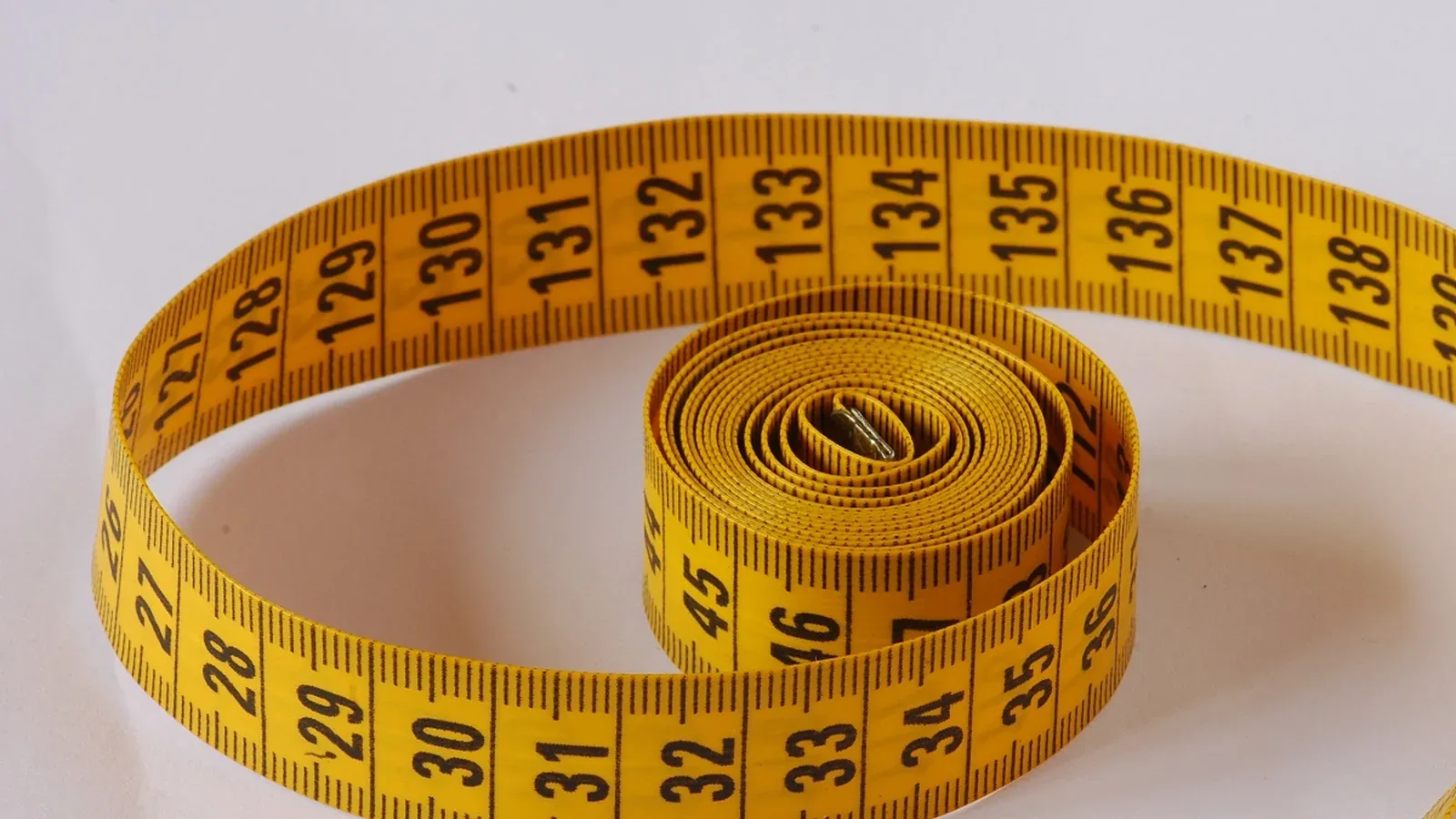
Grab a soft tailor’s measuring tape before shopping. If you only have a stiff metal carpenter’s tape in your toolbox, wrap a piece of non-stretchy phone charger cord or string around your head, pinch where it meets, and lay that length flat against a ruler.
- Find the brow line: Place the front of the tape about 1 inch (roughly two finger-widths) above your eyebrows. Do not drop it down over your brow ridge or push it high up toward your hairline.
- Clear your ears: Guide the tape horizontally just above the tops of your ears on both sides.
- Hit the widest back curve: Loop the tape around the occipital bump (the fullest, widest point at the back of your skull) and hold it snug without denting your skin.
- Measure twice in centimeters: Read the centimeter side first, then measure a second time to make sure the tape did not slip downward behind your neck. I always use the largest accurate reading so I do not talk myself into a tight shell.
If you always ride with a winter thermal skullcap, thick braids, or a high ponytail, measure with that setup in place. We also walked through retention-dial placement in our guide on how to wear a bike helmet with a ponytail so the rear cradle does not push the shell forward.
Adult vs. Youth Helmet Sizing Across Major Brands
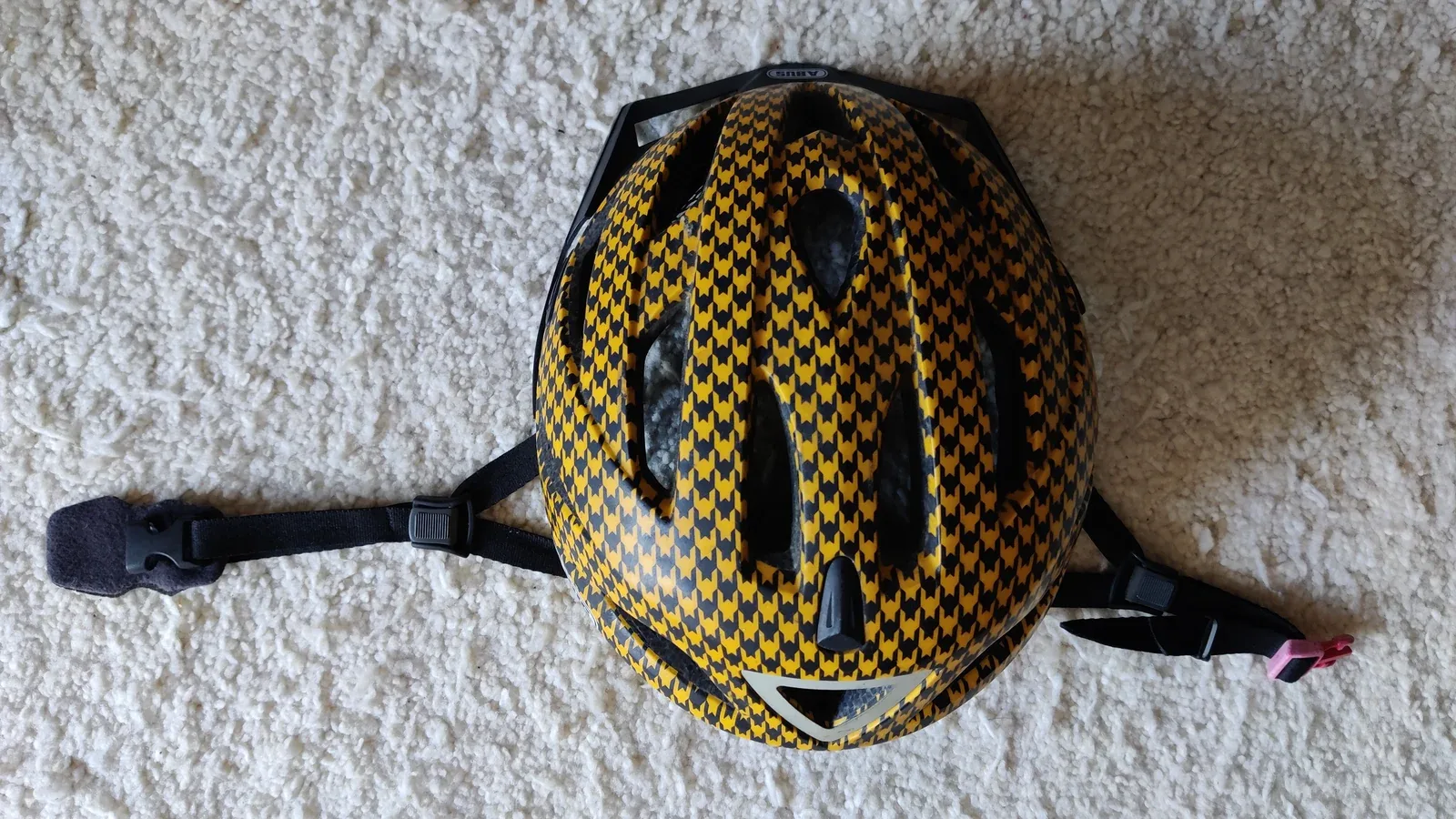
Two brands can call the exact same centimeter range by completely different letters. A “Small” in Giro stops at 55 cm, while a “Small/Medium” in Trek Bontrager stretches up to 58 cm, overlapping a Medium in Bell or Thousand.
Checking brand-by-brand spans saves you return shipping when you order online, especially around the tricky 52–55 cm crossover where kids transition out of youth models into adult shells.
| Brand | Toddler / Youth Range | Small (S or S/M) | Medium (M) | Large / XL |
|---|---|---|---|---|
| Giro | XS 45–49 cm / S 49–53 cm (Scamp II) | 51–55 cm | 55–59 cm | L 59–63 cm / XL 61–65 cm |
| Bell | Univ. Child 47–54 cm (Sidetrack II) | 52–56 cm | 55–59 cm | L 58–62 cm / Univ. 54–61 cm |
| Specialized | Mio 2 46–51 cm / Shuffle 2 49–55 cm | S/M 52–56 cm (Align II) | M/L 56–60 cm | XL 59–62 cm (3-size L 59–63 cm) |
| Trek / Bontrager | Child 48–52 cm / Youth 50–55 cm | S/M 51–58 cm | M 54–60 cm (M/L 55–61 cm) | L 58–63 cm / XL 60–66 cm |
| Thousand | Toddler 45–49 cm / Jr. 49–53 cm | 54–57 cm (Heritage 2.0) | 57–59 cm | L 59–62 cm |
| Woom READY | XS 46–50 cm / S 50–53 cm | M 53–57 cm (older kids) | None | None |
I’d be cautious with “Universal Fit” adult helmets (54–61 cm), such as the Giro Register II MIPS ($84.95). They are handy for households sharing a commuter bike, but if my head sat right at 54 cm, I’d skip a Universal mold and buy a dedicated Small so the helmet does not sit bulky on my head. If you are shopping for a child who just outgrew a 50–53 cm shell, models on our kids’ trail bike guide typically pair best with a 50–55 cm youth helmet like the Trek Tyro ($59.99) or Specialized Shuffle 2 LED ($64.99).
How to Check Fit: The 2-2-2 Rule and Strap Test
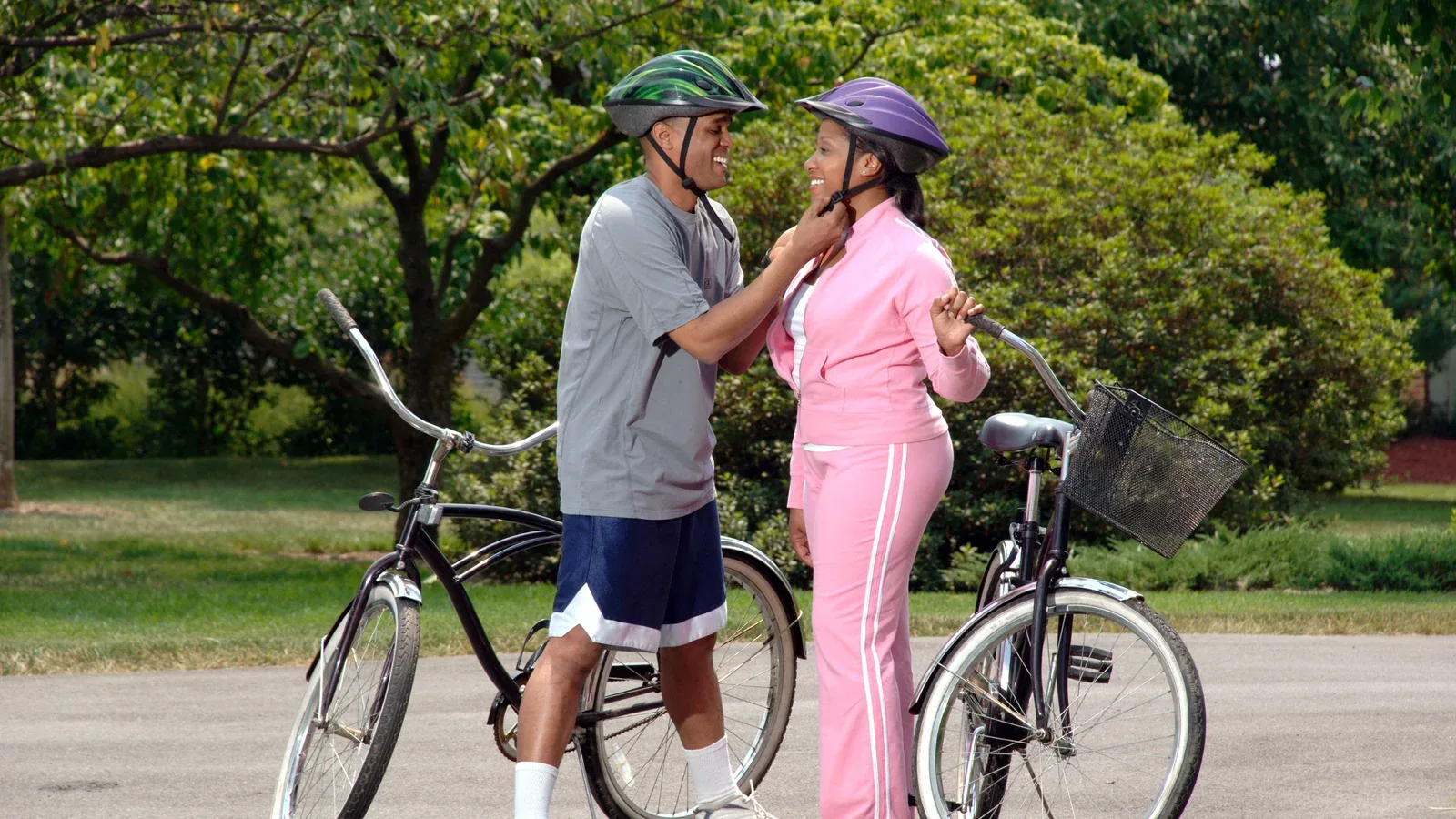
Even the right centimeter size fails to protect your brain if the shell sits tipped back toward your neck. Before you clip the tags off a new helmet, run through the standard 2-2-2 fit rule in front of a mirror.
- First “2” (Forehead gap): Place two fingers horizontally right above your eyebrows. The front brim of the helmet should touch your top finger, no higher. Leaving your entire forehead exposed invites a direct hit in an over-the-bars tumble.
- Second “2” (Side straps): The two side straps must meet in a crisp “Y” or “V” just under each earlobe. Slide the plastic Y-divider up or down until the strap lies flat against your cheek without pinching your ear.
- Third “2” (Chin strap): Buckle the chin strap and slip one or two fingers between the strap and your throat. You should be able to yawn comfortably, yet feel the helmet pull gently downward against the top of your head when you open your mouth wide.
Finish with the shake test before tightening the chin buckle. Loosen the chin strap, twist the rear retention dial until it feels snug, and shake your head vigorously side to side and up and down. A properly sized shell stays planted on your skull even with the chin strap unbuckled.
How to Choose Between Sizes and Head Shapes
Head circumference only measures distance around your skull. It cannot tell you whether your head is long oval or rounder from temple to temple. If you measure 56 cm and feel sharp pressure points on the sides of a shell while the front and back still have finger gaps, you likely have a rounder head shape and need a brand with wider temple clearance.
When your measurement lands squarely on a boundary, such as 55 cm or 58 cm, choose based on how you ride. Road and gravel riders in mild weather usually prefer sizing down for a sleeker, rattle-free fit, provided there is no temple pinch. For cold-weather commuting, I’d size up so a thin thermal cycling beanie fits underneath without maxing out the rear dial.
Specialized Align II MIPS (Adult & Teen S/M: 52–56 cm)
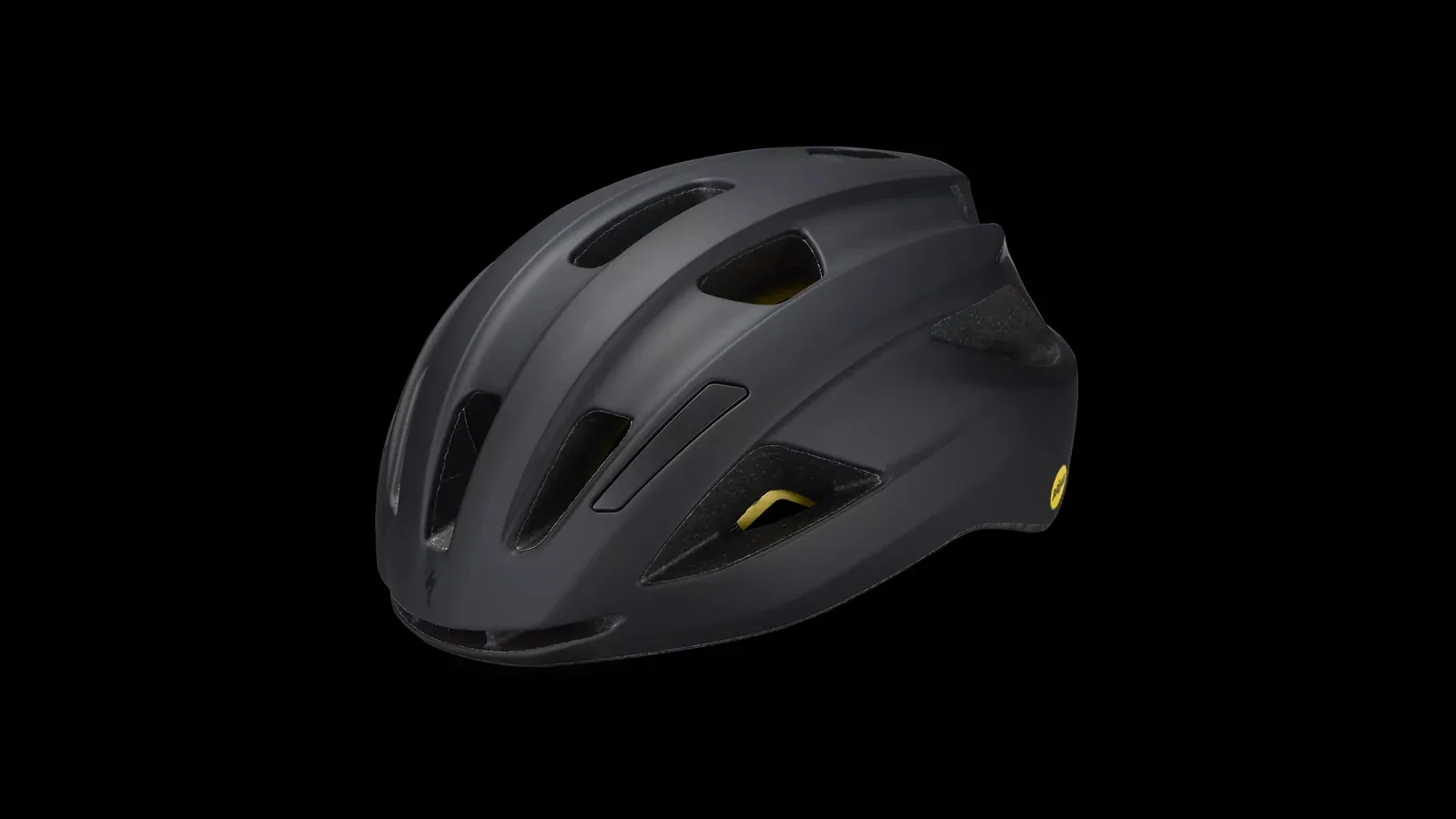
If your child is right around 53–55 cm, or if you want an affordable adult commuter helmet with verified impact performance, the Specialized Align II MIPS ($64.99 list price) is one of the smartest size-crossover options on the market. Unlike cheap generic shells, it earned a 5-Star rating (9.55 score) in the Virginia Tech Helmet Lab ratings and comes in dedicated S/M (52–56 cm), M/L (56–60 cm), and XL (59–62 cm) molds.
For riders commuting at 20 to 28 mph on Class 3 electric bikes, remember that standard CPSC 16 CFR 1203 certification tests lower impact speeds than NTA 8776 e-bike shells. If you ride fast daily, compare sizing against our top e-bike helmet picks before locking in a recreational model.
Frequently Asked Questions
What size bike helmet does an average 8-year-old need?
Most 7-to-10-year-olds measure between 50 cm and 54 cm (19.7 to 21.3 inches), which corresponds to a Youth Small or Youth Medium shell. Always measure above the eyebrows first, since head size varies widely by child.
Is a 55 cm head a Small or Medium bike helmet?
At 55 cm, you sit right on the split between Small and Medium in brands like Giro (S: 51–55 cm, M: 55–59 cm) and Bell (S: 52–56 cm, M: 55–59 cm). Size up to Medium if you wear a cap or have thick hair, and size down for a snug bare-head fit.
Should a kids’ bike helmet have room to grow?
Never buy an oversized helmet expecting a child to grow into it. Choose a model whose adjustable dial starts slightly below their current centimeter measurement, such as a 50–55 cm Youth shell for a 51 cm head, so it fits securely on day one and still lasts two to three years.
What does the CPSC sticker inside a bike helmet mean?
Every bicycle helmet sold legally in the United States must carry a label certifying it meets the CPSC 16 CFR Part 1203 standard for impact absorption and strap retention. Never buy a helmet without that label, even if it includes built-in LED lights or extra visors.

