
Bicycling Land is reader-supported. When you buy through links on this page we may earn an affiliate commission, at no extra cost to you. As an Amazon Associate we earn from qualifying purchases.
Buying a kids bike by age alone is the fastest way to wind up with a heavy frame your child refuses to ride. Two seven-year-olds in the same classroom can differ by six inches in height and four inches in inseam. Unlike adult bikes sorted by frame centimeters, children’s bicycles are sized by wheel diameter, from 12-inch balance bikes up to 26-inch youth frames.
Match the wheel size to your child’s bare-foot inseam and standing height first, and treat the age column as a loose starting point. If you are shopping for safety gear at the same time, check our bike helmet size chart to pair the right shell size with their new ride.
Complete Children’s Bike Size Chart by Age, Height, and Inseam
The chart below maps every standard US wheel size to typical rider height, inseam, and bike features. Whenever a child falls between two rows, I look at two things: whether they already know how to pedal and brake independently, and whether the brand builds a low-standover frame.
| Wheel Size | Typical Age | Height Range | Inseam Range | Common Setup |
|---|---|---|---|---|
| 12-Inch | 1.5–3.5 yrs | 31″–40″ (79–102 cm) | 12″–16″ | Balance bike, no pedals |
| 14-Inch | 3–4.5 yrs | 37″–43″ (94–110 cm) | 15″–19″ | Large balance or first single-speed pedal bike |
| 16-Inch | 4–6 yrs | 41″–48″ (104–122 cm) | 17″–22″ | Single-speed pedal bike with coaster or hand brakes |
| 20-Inch | 5–8 yrs | 45″–53″ (114–135 cm) | 19″–25″ | 6- to 8-speed gears, dual hand brakes |
| 24-Inch | 7–11 yrs | 51″–59″ (130–150 cm) | 22″–28″ | Multi-speed trail, hybrid, or entry MTB |
| 26-Inch | 10–14 yrs | 55″–65″ (140–165 cm) | 25″–30″ | Youth trail bike or XS adult frame transition |
Notice how generous the overlap looks across rows. A 46-inch-tall child with a 20-inch inseam technically fits either a tall 16-inch bike or a compact 20-inch bike. That overlap is why measuring inseam takes the guesswork out of online orders.
How to Measure Your Child’s Inseam and Height in Three Minutes
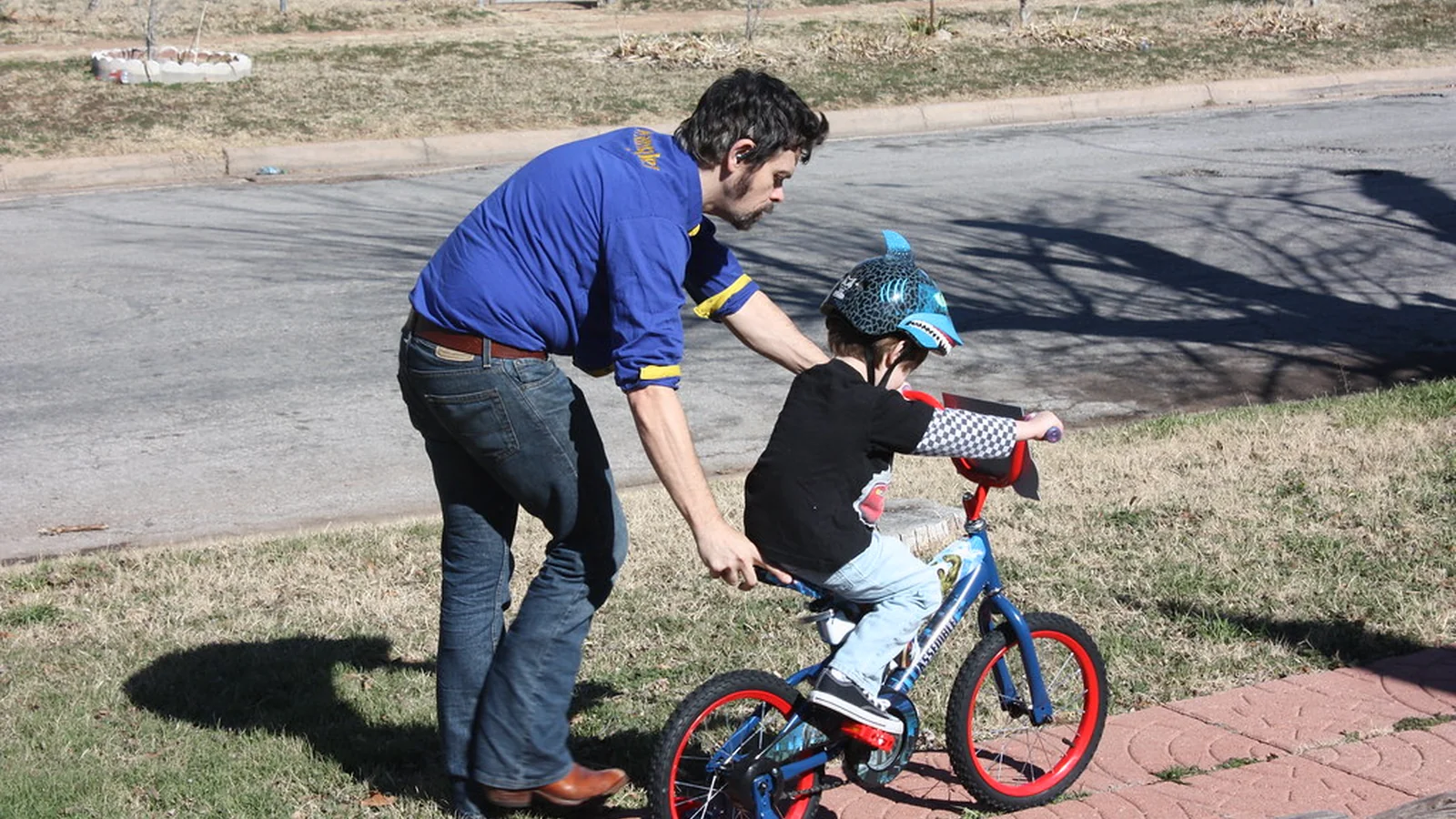
Skip clothing sizes and grab a hardcover book and a tape measure. Shoes add nearly an inch of height, so measure your child barefoot on a hard floor rather than thick carpet.
- Measure height against a flat wall: Have your child stand with heels touching the baseboard, look straight ahead, and mark the top of their head lightly with a pencil.
- Measure true cycling inseam: Keep them barefoot with heels against the wall and feet about six inches apart. Slide a hardcover book upward between their legs until it meets firm contact, simulating saddle pressure.
- Record floor-to-spine distance: Measure from the floor straight up to the top edge of the book spine. Compare that exact inch measurement against the bike brand’s listed minimum saddle height and standover height.
Kids Bike Sizes by Age and Riding Stage
Even with accurate measurements, what a child needs changes rapidly between toddlerhood and middle school. Below is how each wheel size handles, along with real examples from brands like Woom, Guardian, and REI Co-op Cycles.
Ages 1.5 to 3.5: 12-Inch Balance Bikes (Woom GO 1)
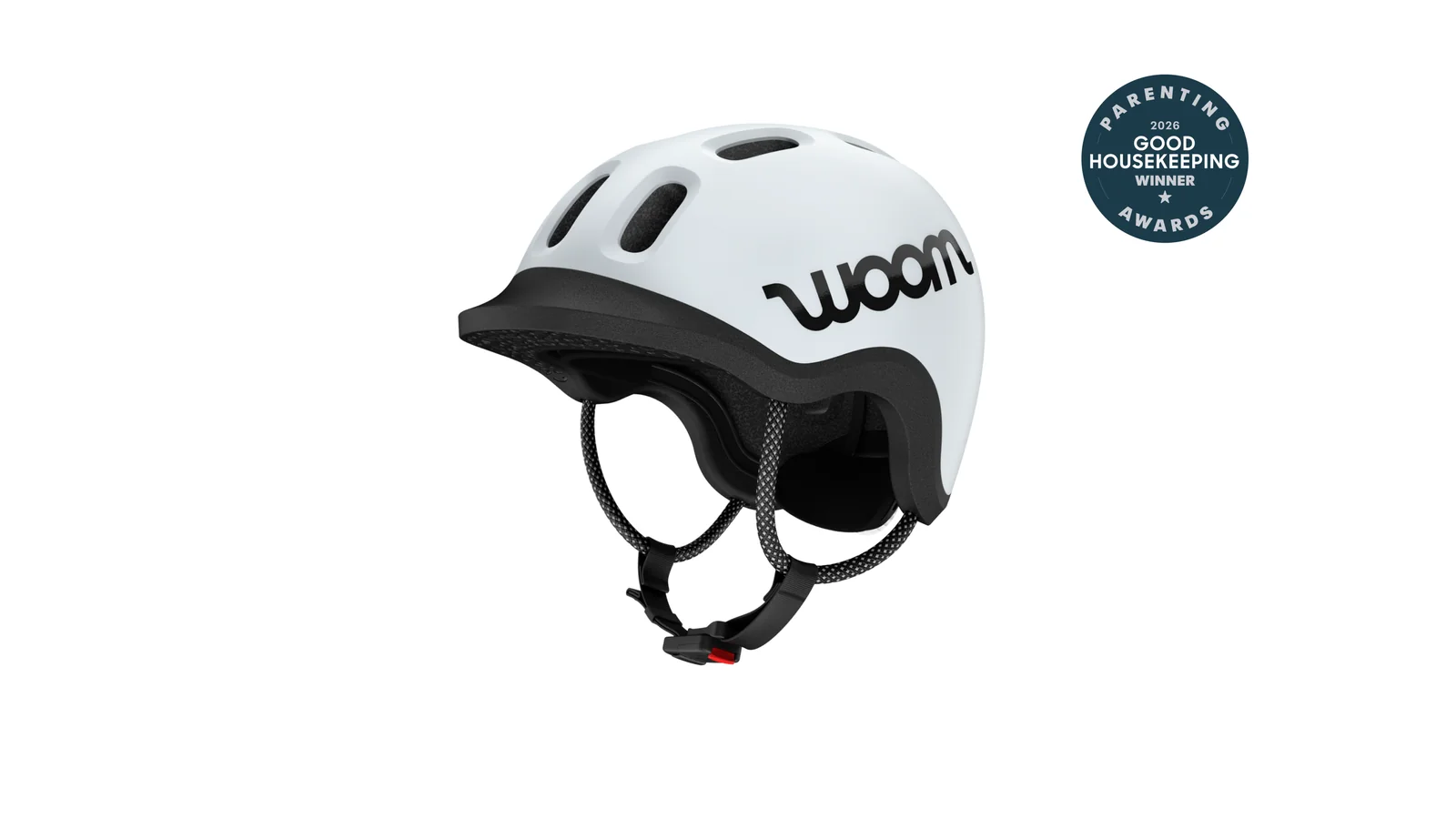
Toddlers learn balance much faster when they can push with their feet and glide without pedals getting in the way. Standard 12-inch balance bikes weigh between 6 and 9 pounds. Look for a minimum saddle height around 12 inches so a 13-inch inseam rider can sit comfortably with knees slightly bent.
The Woom GO 1 lists at roughly $249 and weighs about 6.4 pounds, featuring a steering limiter that keeps toddlers from jackknifing the front wheel in sharp turns. If you want an ultra-simple budget option with foam tires that never go flat, a classic Strider 12 works well on smooth sidewalks. For gravel driveways or grass parks, I prefer pneumatic rubber tires like the Woom uses because they absorb chatter and grip corners better.
Ages 3 to 4.5: 14-Inch Transition Bikes
A 14-inch frame fills the awkward gap for tall three-year-olds or cautious four-year-olds who outgrew a 12-inch balance bike before they feel ready for a heavy 16-inch pedal bike. Two distinct styles live in this size: larger balance bikes (like the Woom GO 1 Plus at ~8.6 to 9.6 pounds) and ultra-compact first pedal bikes (like the Woom GO 2 at ~12.2 pounds or Guardian 14).
If your child already glides down gentle slopes with both feet lifted on a 12-inch balance bike, skip a 14-inch balance bike and move straight to a lightweight 14-inch pedal bike. Make sure the brake levers match small fingers. Many department-store 14-inch bikes ship with heavy steel frames over 20 pounds and stiff levers a four-year-old cannot squeeze safely.
Ages 4 to 6: 16-Inch First Pedal Bikes (Woom GO 3)
Sixteen-inch bikes are the classic first pedal bike for kindergarteners and first graders. At roughly 41 to 48 inches tall, kids here usually need a 17-inch minimum inseam to clear the frame and reach the pedals cleanly. Bikes at this stage are almost always single-speed, keeping weight down and maintenance simple.
The biggest fork in the road at 16 inches is brake style. Traditional big-box bikes use a rear coaster brake (pedal backward to stop), which forces kids into awkward foot positions when starting from a standstill. Specialty kids brands like Woom (GO 3, around 13 to 15 pounds and $499 to $549) and Guardian (16-inch with SureStop single-lever braking, around $350 to $400) let kids spin the pedals backward freely to set their stronger foot at the two-o’clock launch position. If I were picking between the two for a neighborhood rider, I’d choose hand brakes over a coaster brake every time because kids transition to 20-inch geared bikes without having to unlearn foot braking.
Ages 6 to 8: 20-Inch Geared Bikes (Woom EXPLORE 4)
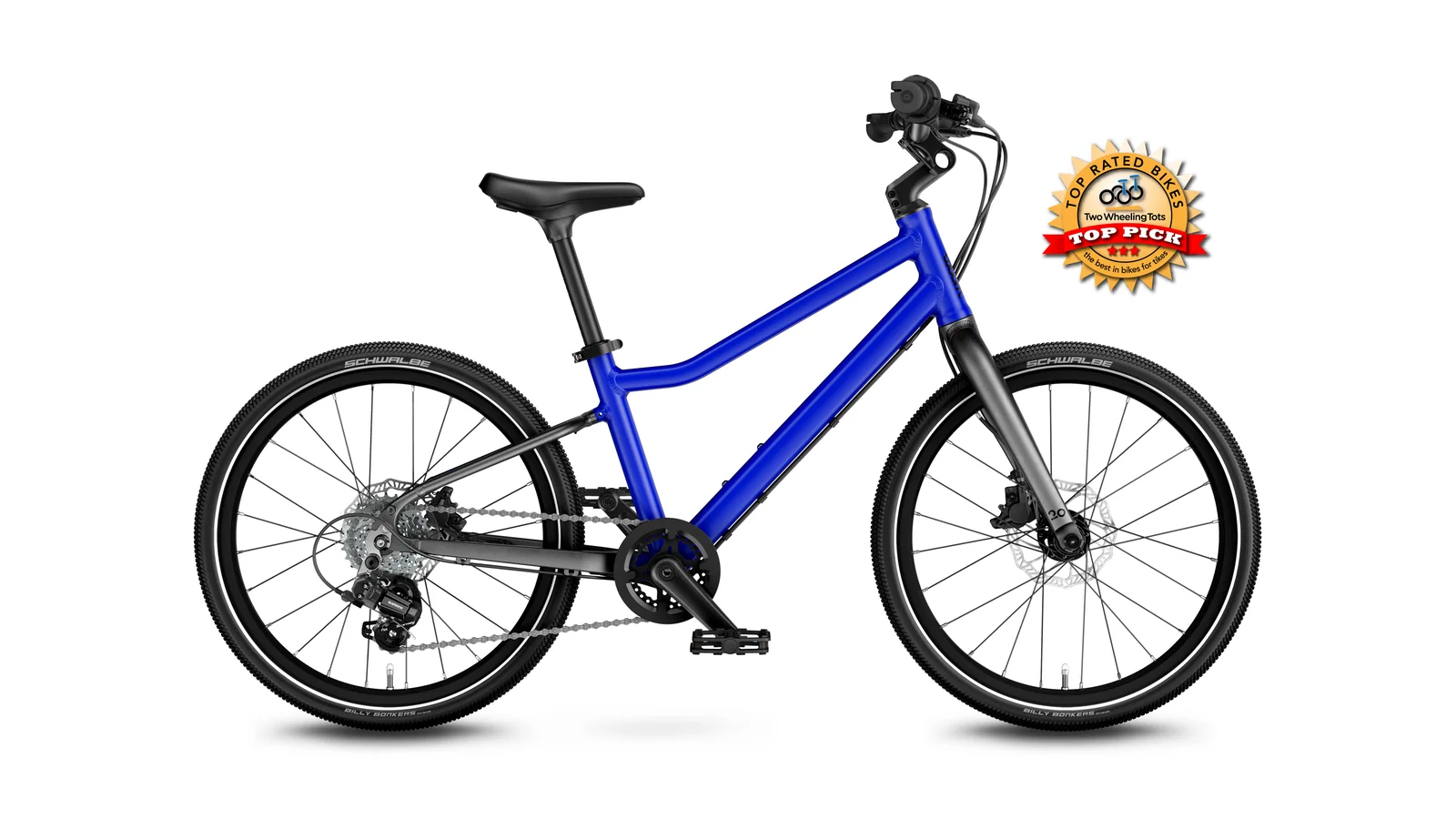
Parents searching “what size bike for 7yr old” usually land squarely in the 20-inch category. At 45 to 53 inches tall with a 19- to 25-inch inseam, a seven-year-old outgrows single-speed cruising quickly. Twenty-inch bikes introduce rear derailleurs (usually 6, 7, or 8 speeds), trigger or twist shifters, and longer wheelbase stability for bike paths and dirt trails.
When shopping for a seven-year-old, check shifter ergonomics alongside frame height. Grip twist shifters are tough for damp or small hands to twist up into the biggest climbing cog, whereas modern light-action trigger shifters let a kid click gears with their thumb without loosening their grip on the bar. Models like the REI Co-op REV 20, Guardian 20, or Woom GO 4 (~17.2 pounds) keep weight low enough that kids can ride three to five miles without fading on small hills. Stepping up to hydraulic disc brakes on bikes like the Woom EXPLORE 4 (~$749, ~18 pounds) pays off if you live in hilly or wet areas.
Ages 8 to 11: 24-Inch and 26-Inch Youth Bikes (Woom EXPLORE 5)
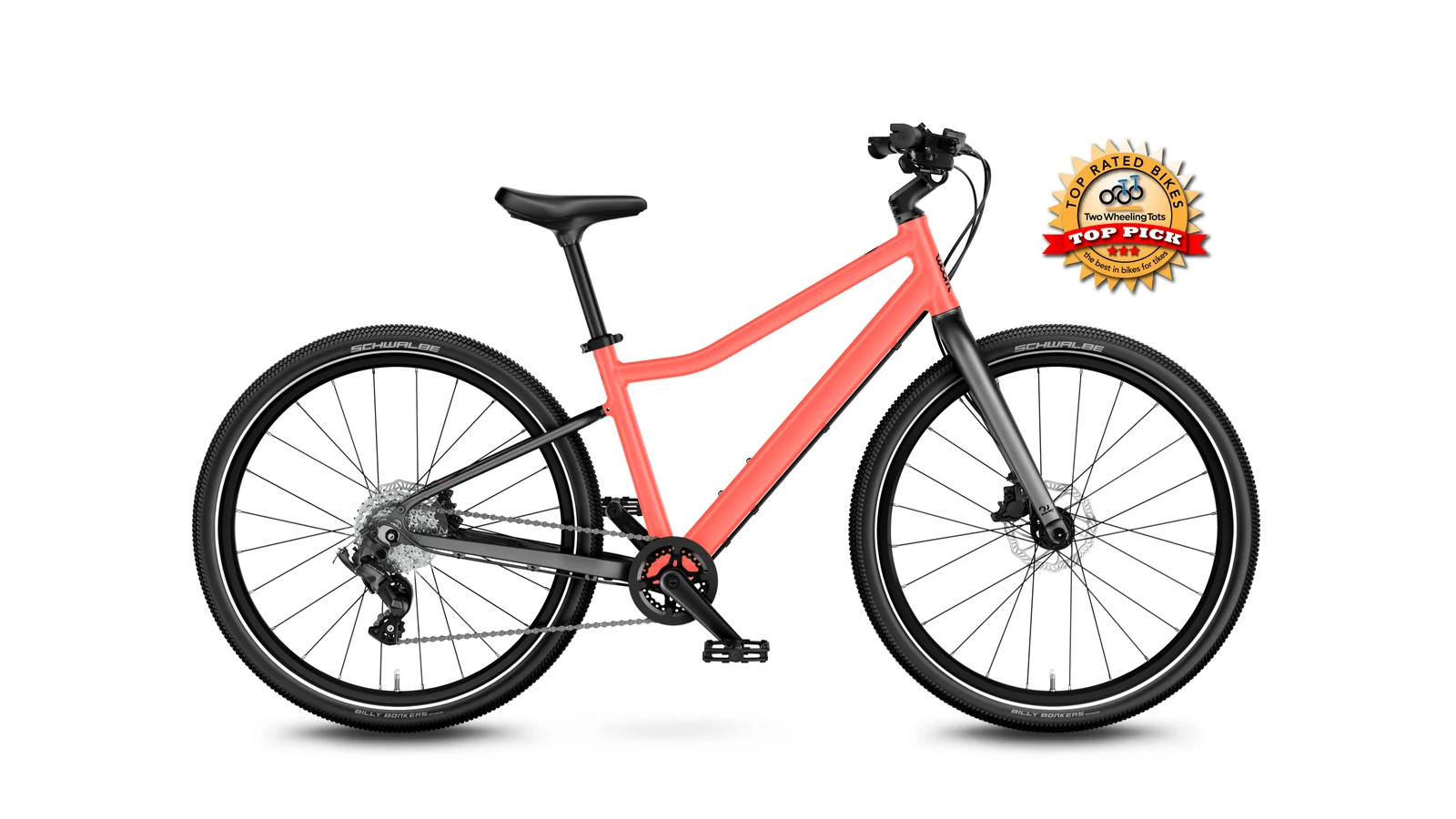
Parents asking “what size bike for 9yr old” sit right at the crossroads of 20-inch and 24-inch wheels. A nine-year-old under 50 inches tall or cautious on bikes will feel far more confident on a taller 20-inch frame. A nine-year-old at 51 to 56 inches tall with a 23-inch-plus inseam is ready for a 24-inch bike such as the Woom EXPLORE 5, REI Co-op REV 24, or Trek Precaliber 24.
By age 10 to 13 (55 inches and up), 26-inch youth frames like the Woom EXPLORE 6 (~22.2 pounds) mirror adult geometry with shorter crank arms and narrower handlebars. For trail-oriented tweens ready for singletrack, check our best kids mountain bikes roundup. If they are eyeing motorized trail toys instead, review local rules and age limits in our kids electric dirt bikes guide before buying.
Bike Weight Matters More Than Wheel Size Alone
Compare an adult riding a 25-pound commuter bike against a 45-pound child pushing a 28-pound steel kids bike. That cheap steel kids bike weighs more than 60% of the child’s body weight, which feels like an adult hauling a 105-pound bicycle uphill.
- Woom GO 3 (~13.2 lb): 31% of a 42 lb five-year-old’s weight.
- Specialty Alloy 16″ (~17 lb): ~40% ceiling for easy starts and one-foot catches.
- Best for: New pedal riders, hilly neighborhoods, and longer family rides.
- Typical Steel 16″ (~25 lb): 60% of a 42 lb rider’s weight.
- Real-world feel: Comparable to an adult pushing a 105 lb bike uphill.
- Common downside: Slow launches, stiff brakes, and low-speed tip-overs.

