
Bicycling Land is reader-supported. When you buy through links on this page we may earn an affiliate commission, at no extra cost to you. As an Amazon Associate we earn from qualifying purchases.
Shopping for a gravel bike under $1,000 means making smart mechanical trade-offs before you hand over your card. At this price, you will not get full hydraulic disc brakes or wireless shifting, and major bike-shop brands have mostly pushed entry gravel builds above $1,200. Still, several direct-to-rider makers and select legacy brands pack thru-axles, carbon forks, and wide tire clearance under the $1,000 line.
I focused exclusively on complete bikes currently sold in the United States under $1,000, skipping out-of-stock clearances and overseas models priced in pounds. If your budget is tighter or you only ride smooth pavement, compare our best road bikes under $500 or start with our bicycle type buyer’s guide.
Prices as of November 2026.
| Bike Model | List / Sale Price | Frame & Fork | Drivetrain | Brakes | Stock Tires | Best For |
|---|---|---|---|---|---|---|
| State 4130 All-Road | $999.99 | 4130 Chromoly / Steel | 1×12 (40T / 11-46T) | Cable-actuated hydraulic | 700x50mm or 650bx2.1″ | Best overall adventure & trails |
| Poseidon X Gen 3 | $899.99 ($999.99 list) | 6061 Alloy / Full Carbon | Sword/Advent X 1×10 (11-48T) | Tektro C550 mechanical | 700x40c tubeless-ready | Lightest weight & fast gravel |
| Primos Dame | $799 ($949 list) | 4130 Chromoly / Steel | microSHIFT Sword 1×10 (11-46T) | Tektro mechanical disc | 650bx50mm tubeless-ready | Plush 650b steel value |
| Kona Rove AL | $999 | 6061 Alloy / Alloy | Shimano ESSA 1×8 (11-45T) | Tektro Mira CX mechanical | Maxxis Rambler 700x40mm | Local shop support & commuting |
| Tommaso Sentiero | $949.99 ($1,049.99 list) | 6061 Alloy / Steel | Shimano Claris 3×8 (24-speed) | Avid BB5 mechanical disc | CST Tirent 700x40c | Steep paved climbs & wide gearing |
| Poseidon X Origin | $749.99 ($799.99 list) | 6061 Alloy / Full Carbon | Sword Black / Advent 1×9 (11-46T) | Pro5 mechanical-hydraulic | Kenda Happy Medium 700x40c | Carbon fork under $800 |
| Retrospec Amok | $529.99 | Aluminum / Alloy | Shimano Altus 1×8 (Flat Bar) | Mechanical disc (160mm) | 700x40c all-condition | Budget flat-bar dirt & commute |
What $1,000 Buys in a Gravel Bike Today
Ten years ago, sub-$1,000 drop-bar bikes topped out at 32mm road tires and quick-release skewers. Today, the better value picks below $1,000 clear 45mm to 55mm tires, run 12mm thru-axles that prevent disc-brake rotor rub, and offer 11-46T or 11-48T climbing gears out of the box.
The biggest fork in the road is frame material. At this price, you are usually choosing between heavier, ultra-compliant chromoly steel or lighter aluminum paired with a carbon fork. Our bike frame materials guide breaks down the metallurgy in detail, while the trade-off box below sums up what changes on dirt.
You prioritize massive tire clearance (50mm+), plenty of bikepacking cage mounts, and natural vibration damping over raw climbing weight.
You want a bike closer to 22.5 to 25 pounds that accelerates quickly on paved connectors, hills, and brisk weekend gravel loops.
1. State Bicycle Co. 4130 All-Road (Best Steel Adventure All-Rounder)
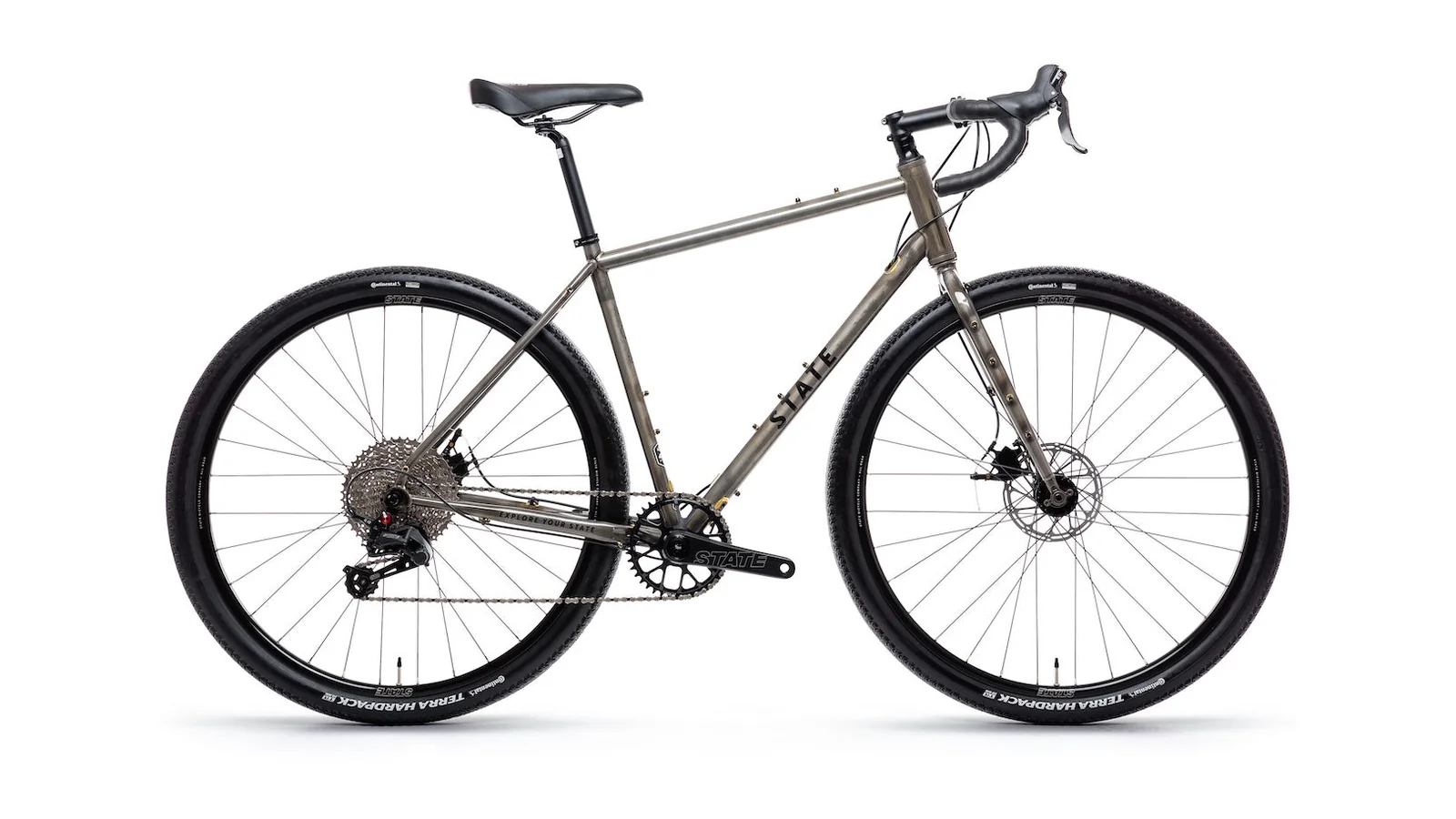
The State Bicycle Co. 4130 All-Road sits right at $999.99 and earns the top spot for riders who want maximum capability per dollar. State updated the double-butted 4130 chromoly frame with a SRAM Universal Derailleur Hanger (UDH), internal dropper-post routing, and 12x100mm front and 12x142mm rear thru-axles. That UDH standard matters because any bike shop in the country stocks replacement hangers if you bend one on a backcountry ride.
At checkout, you pick between 700c wheels fitted with fast-rolling 50mm Continental Terra Hardpack TR tires or 650b wheels wrapped in 2.1-inch Vittoria Barzo mountain bike tires. Both frame and steel fork clear up to 700x55mm or 650bx2.4-inch rubber, giving you more cushion than most dedicated gravel race bikes twice its price. State pairs a 1×12 drivetrain (40T chainring and 11-46T cassette) with cable-actuated hydraulic disc brakes that pull a hydraulic piston right at the caliper for stronger bite than standard mechanical brakes.
- Pros: Huge 700x55mm / 650bx2.4″ clearance, UDH compatibility, dropper-ready frame, three bottle mounts plus rack and fork bosses.
- Cons: Heavy stock steel build around 26 to 27.5 lb depending on wheel size, and the 650b Vittoria Barzo tires are not tubeless-rated.
I would pick the 4130 All-Road in 700c if you ride rough fire roads, want to try bikepacking, and prefer upgrade-friendly frame standards over shaving three pounds.
2. Poseidon X Gen 3 (Best Lightweight Carbon-Fork Value)
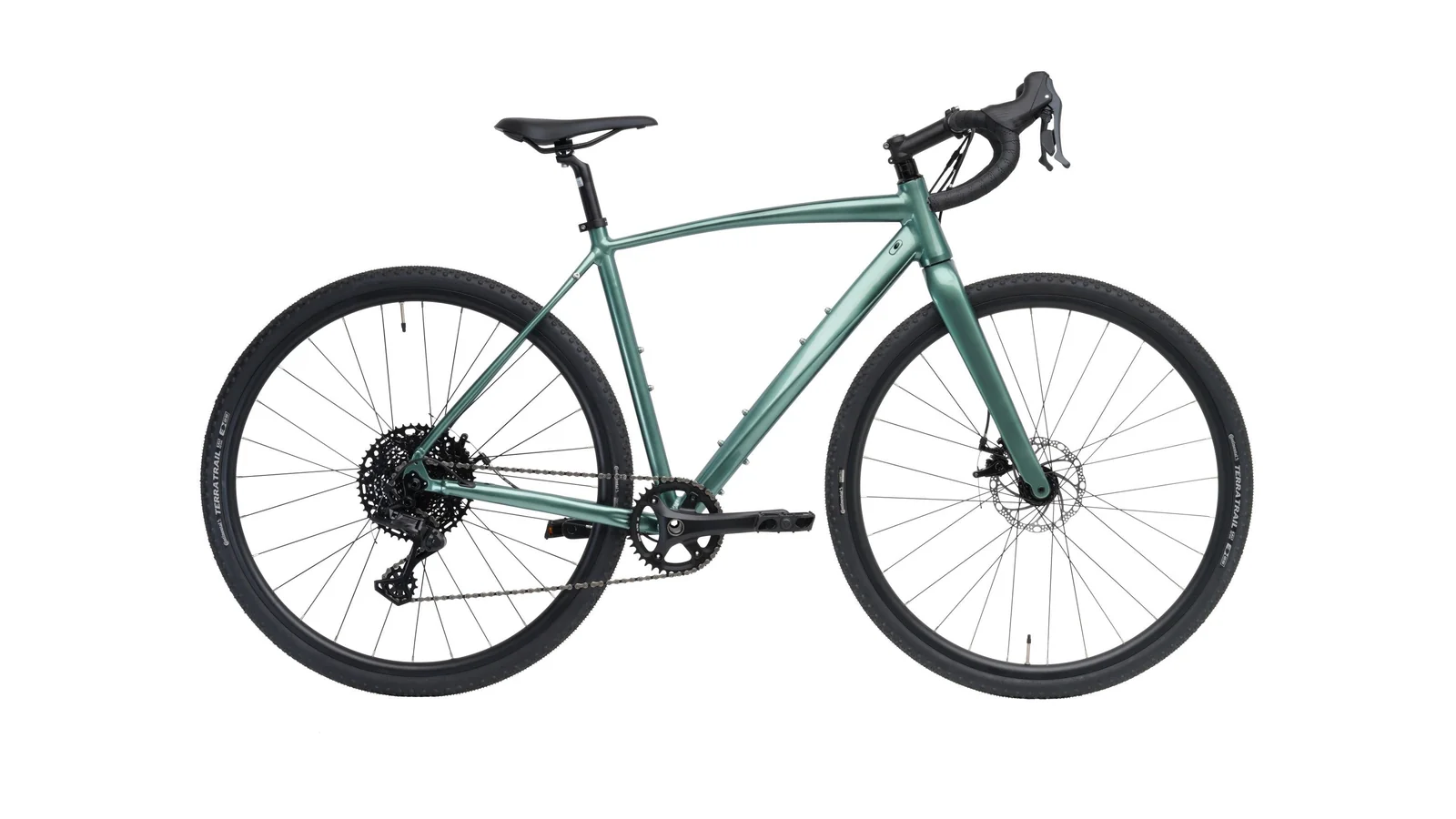
If 27-pound steel bikes feel sluggish on your local climbs, the Poseidon X Gen 3 cuts straight to speed. Listing at $999.99 and frequently discounted to $899.99, it pairs a double-butted 6061 aluminum frame with a sleek full-carbon fork, pushing complete weight down to roughly 22.5 pounds. That four-pound drop is immediately noticeable when carrying the bike up apartment stairs or standing to sprint out of corners.
Poseidon fixed the older X Ambition’s biggest compromises on the Gen 3 by adding front and rear thru-axles, an external-cup bottom bracket, and tubeless-ready 24mm internal wheels shod with Continental Terra Trail TR 700x40c tires. Shifting relies on crisp microSHIFT Sword 10-speed levers driving an Advent X rear derailleur across a wide 11-48T cassette and 38T alloy chainring. Clearance stretches to 700x45mm or 650bx50mm, though Poseidon removed the fork cargo mounts on this generation to keep the carbon fork clean.
- Pros: Around 22.5 lb complete weight, full-carbon fork, front and rear thru-axles, tubeless-ready wheels and Continental tires.
- Cons: No fork-blade cargo mounts for heavy bikepacking bags, and Tektro C550 mechanical disc brakes require periodic pad dialing.
I would buy the Poseidon X Gen 3 over steel competitors if most of your miles mix paved bike paths with fast crushed-limestone gravel.
3. Primos Dame (Best Wide-Tire Steel Bikepacking Value)
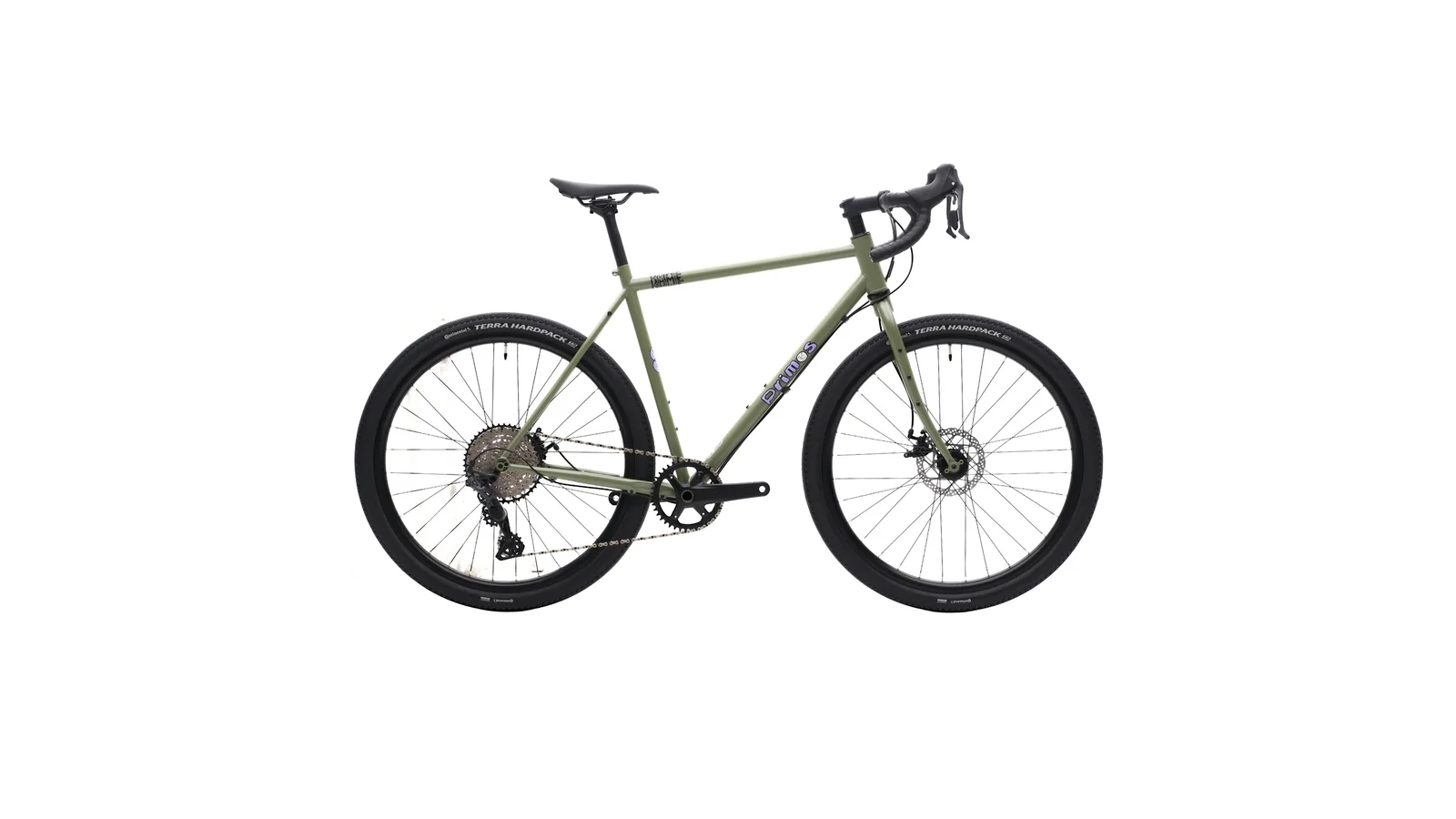
The Primos Dame regularly sells for $799 ($949 regular list), making it the strongest sub-$800 steel gravel package in the United States. Built around an ED anti-rust coated 4130 chromoly frame and matching steel fork with front and rear thru-axles, it borrows the laid-back comfort of classic adventure bikes without skimping on modern gearing. Primos backs the frame and fork with a lifetime warranty.
Instead of older Claris road shifters, the Dame comes with microSHIFT’s gravel-specific Sword 1×10 groupset (42T crankset and 11-46T cassette), giving you clutch tension that stops chain slap on washboard gravel. Stock 650b wheels come wrapped in wide 50mm Continental tubeless-ready tires, with frame clearance reaching 650bx55mm or 700x50mm. Expect complete weight around 26 pounds, and note that direct-shipped bikes occasionally need derailleur indexing or brake rotor truing out of the box.
- Pros: MicroSHIFT Sword 1×10 clutch drivetrain, 50mm Continental tires on 650b wheels, thru-axles, and $799 sale pricing.
- Cons: Tektro mechanical disc brakes lack hydraulic modulation, and direct shipping means you should check rotor straightness and limit screws before riding.
I would grab the Primos Dame if you want the plushness of 50mm tires and steel tubing while keeping $200 left over for bags, pedals, and a helmet.
4. Kona Rove AL (Best Bike-Shop Aluminum Commuter & Light Tourer)
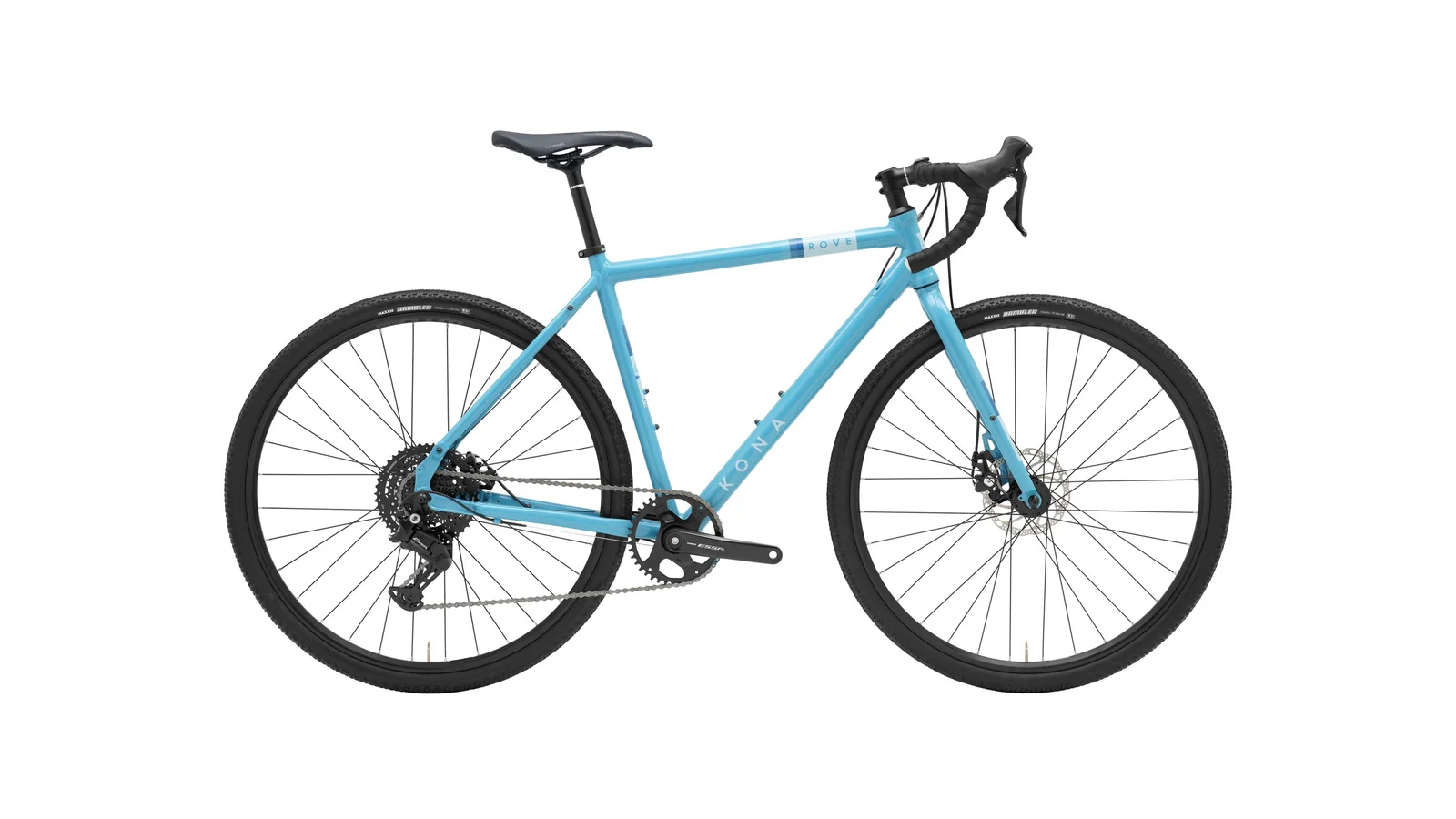
Buying online saves money, yet many first-time gravel riders want a local shop to size the frame, assemble the cockpit, and handle the first tune-up. At $999, the Kona Rove AL is one of the very few mainstream shop-sold gravel bikes remaining below $1,000. Kona refreshed the platform with updated gravel geometry, a 6061 butted aluminum frame, an aluminum disc fork, and 16-degree flared gravel handlebars.
Kona also swapped older 2×8 Claris parts for Shimano’s newer ESSA 1×8 drivetrain, pairing a 40T crankset with a huge 11-45T cassette. Losing the front derailleur eliminates cross-chaining rubs and simplifies shifting for beginners, though the 8-speed spacing leaves slightly larger jumps between gears than a 10-speed bike. You get dependable Maxxis Rambler 700x40mm tires, Tektro Mira CX mechanical disc brakes, and a threaded Shimano BSA 68mm bottom bracket, though Kona sticks with traditional 9x100mm and 10x135mm quick-release hubs at this price.
- Pros: Supported through local Kona dealers, simple 1×8 Shimano ESSA gearing (11-45T), quality Maxxis Rambler 40mm tires, flared drop bar.
- Cons: Quick-release skewers instead of thru-axles, alloy fork rides stiffer than carbon or steel, and 8-speed cassette gaps feel wider on flat pavement.
I would choose the Kona Rove AL if you want local bike-shop fitting and warranty support without paying $1,300+ for an entry-level Salsa or Specialized.
5. Tommaso Sentiero (Best 24-Speed Range for Steep Paved Climbs)
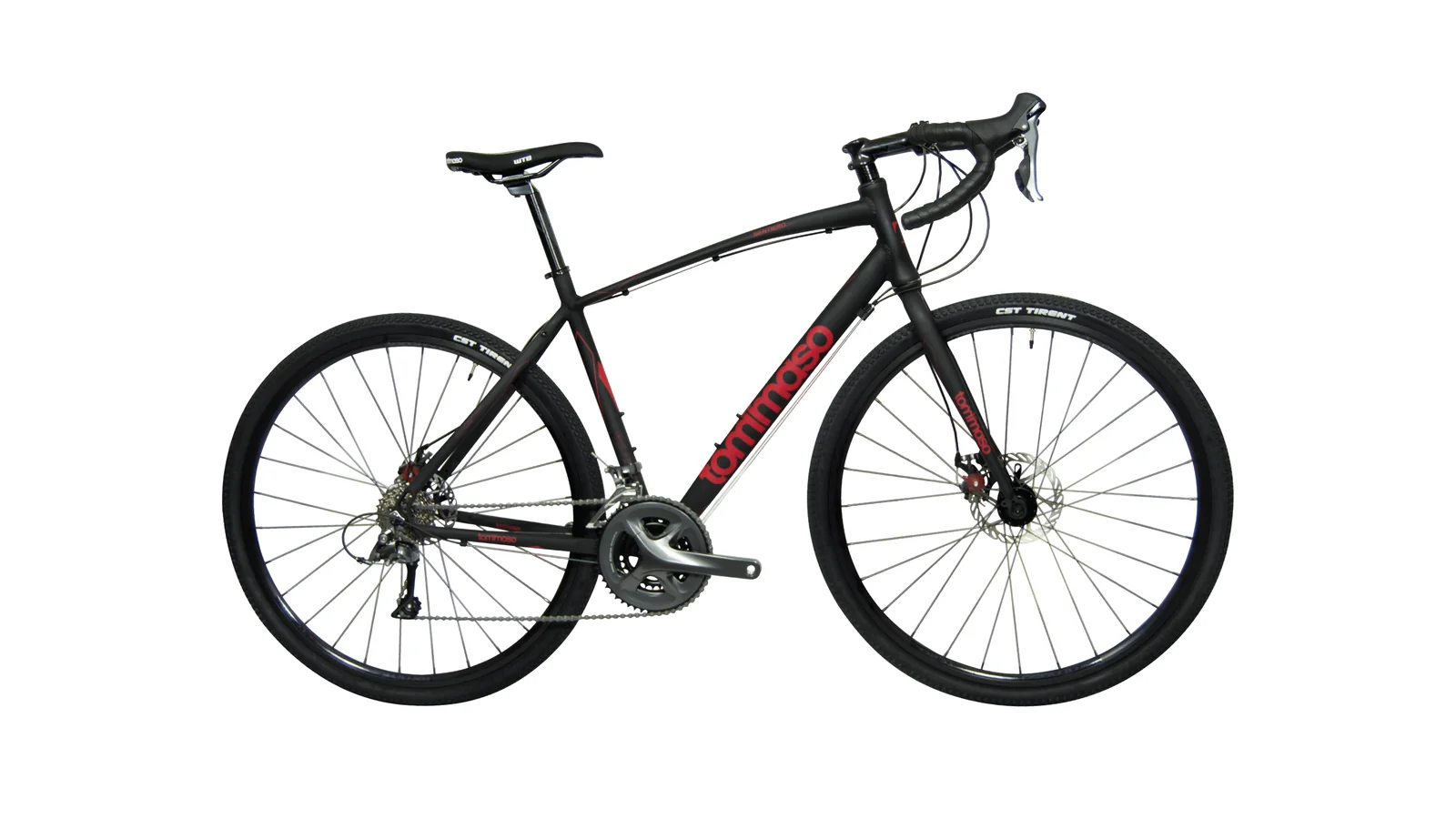
Most budget gravel bikes moved to 1x drivetrains, yet riders tackling long paved climbs followed by gravel descents still benefit from extra gears. Tommaso Cycling lists the Sentiero at $1,049.99 and regularly sells it for $949.99 directly through its store, pairing a 6061 aluminum frame and steel fork with a full Shimano Claris R2000 3×8 (24-speed) drivetrain. That 30/39/50T triple crankset gives you both a tall top gear for fast paved descents and an easy granny gear for loaded hills.
Tommaso rounds out the build with Avid BB5 mechanical disc brakes, a comfortable WTB Volt saddle, Corsa TC-20D rims, and 700x40c CST Tirent tires. Weighing roughly 26 pounds, it balances durability with commuter practicality via full rack and fender mounts. Just keep in mind that a 3×8 front derailleur takes occasional cable tension tweaks, and quick-release wheels lag behind thru-axle rivals like Poseidon and State.
- Pros: Huge 24-speed Shimano Claris gear range, steel fork damps front-end buzz, WTB Volt saddle, easy online checkout.
- Cons: Older 3×8 triple crankset and quick-release axles, plus boxed direct deliveries require a careful brake and derailleur check before your first ride.
I would consider the Tommaso Sentiero if you ride hilly asphalt routes to reach smooth dirt roads and want a wide 24-speed gear range.
6. Poseidon X Origin (Best Carbon-Fork Drop-Bar Bike Under $800)
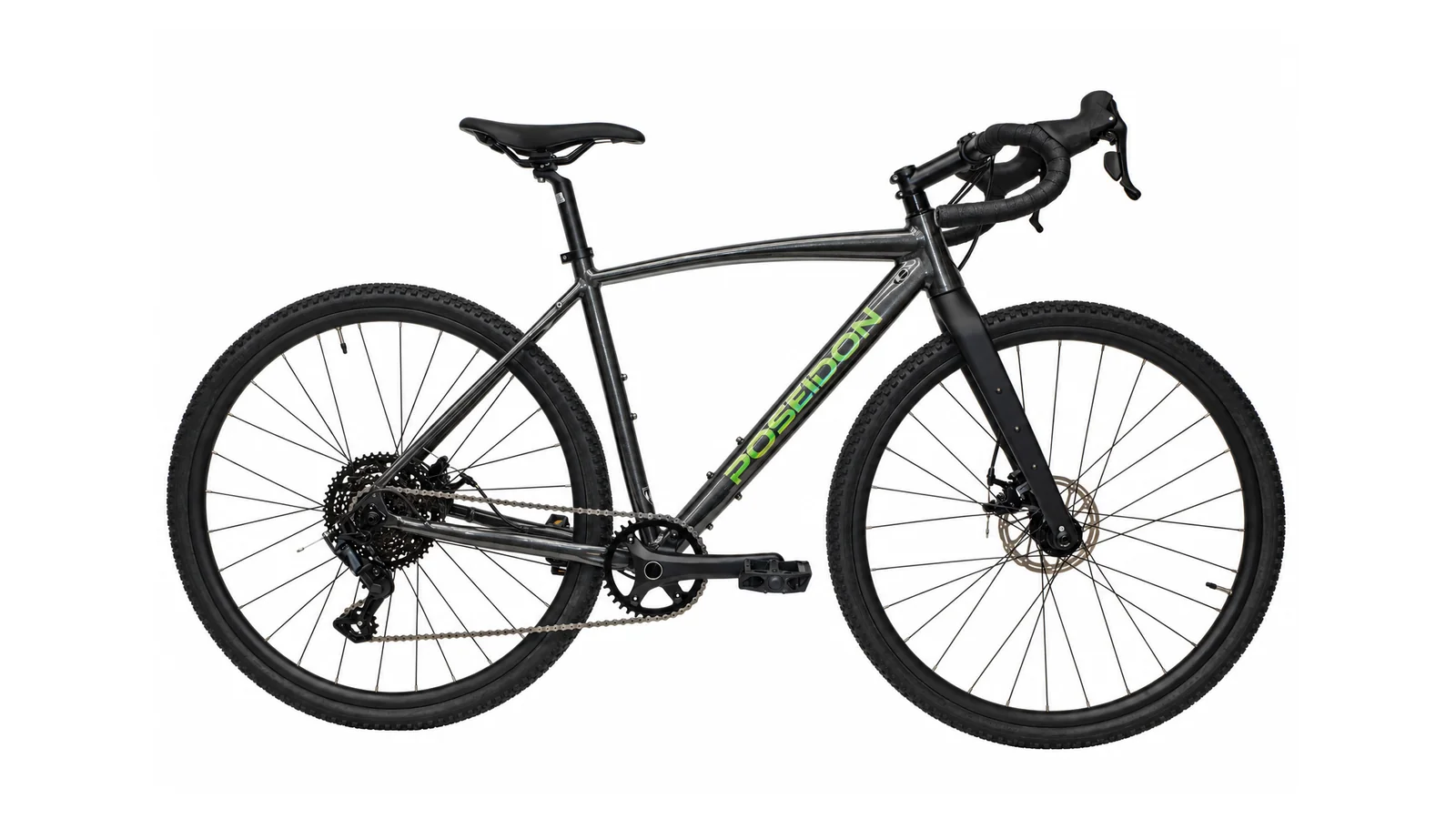
Priced at $799.99 list (with $749.99 seasonal pre-order pricing), the Poseidon X Origin strips a few race-oriented extras off the X Gen 3 to hit an aggressive price without sacrificing frame quality. You still get the same double-butted 6061 aluminum frame, front and rear thru-axles, external-cup bottom bracket, and 700x45c tire clearance. Even better for weekend explorers, Poseidon designed a brand-new comfort-layup full-carbon fork for the Origin that brings back three-pack accessory mounts on the fork blades.
To keep the price $150 below the Gen 3, the X Origin steps down to a microSHIFT Sword Black 1×9 drivetrain (38T steel chainring and 11-46T cassette) and tube-type 700c clincher wheels with Kenda Happy Medium 700x40c tires. You do get Poseidon Pro5 mechanical-hydraulic calipers with compressionless housing, which deliver firmer lever feel than basic single-piston cable brakes. If you never plan to run tubeless tires right away, this is the cleanest sub-$800 aluminum and carbon-fork chassis on the market.
- Pros: Full-carbon fork with cargo mounts, front/rear thru-axles, Pro5 mechanical-hydraulic brakes, and $799.99 list price.
- Cons: Stock wheels are not tubeless-compatible, and 9-speed gearing has slightly wider steps than the Gen 3’s 10-speed setup.
I would pick the Poseidon X Origin if you want a lightweight carbon-fork bike with fork mounts under $800 and prefer running simple inner tubes.
7. Retrospec Amok (Best Flat-Bar Gravel Option Under $550)
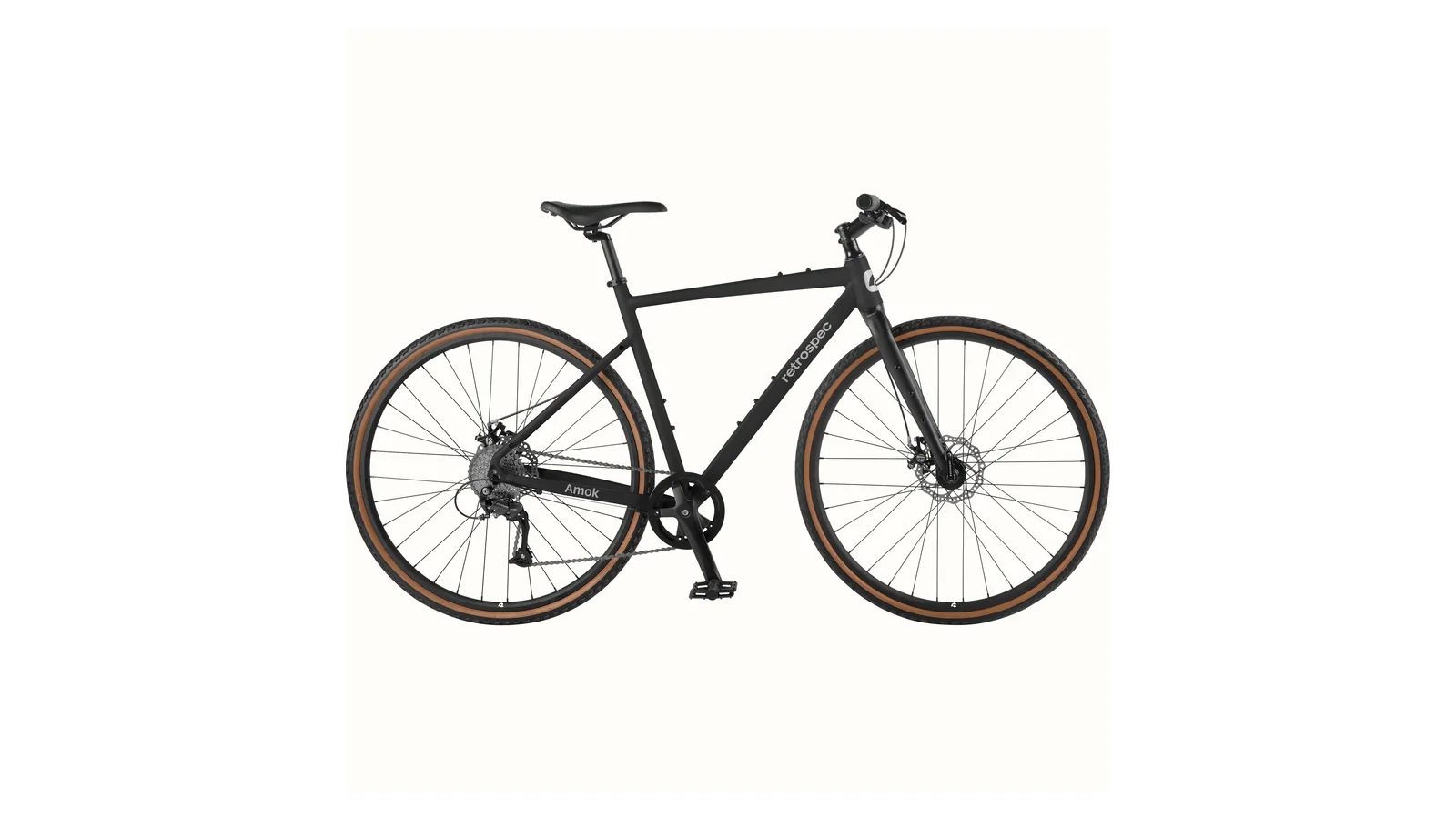
Not every rider shopping for a budget gravel bike wants drop handlebars. Drop bars stretch your reach forward and take time to feel natural on loose dirt. Flat handlebars give you upright visibility and direct brake control. At $529.99, the Retrospec Amok gives beginners an aluminum gravel-geometry frame, 700x40c small-block tires, mechanical disc brakes with 160mm rotors, and a reliable Shimano Altus 1×8 drivetrain with thumb-trigger shifters.
Offered in five sizes from XS to XL, the Amok includes bottle and rear rack mounts so it doubles cleanly as a weekday commuter or rail-trail cruiser. At $530, you give up thru-axles, a carbon fork, and wide 11-46T climbing cassettes, so sustained steep dirt climbs will feel tougher than on the State or Poseidon picks. Still, for flat-bar confidence on neighborhood dirt paths and crushed gravel, nothing near $500 matches its tire clearance and geometry.
- Pros: $529.99 price, intuitive flat-bar handling, five frame sizes (XS to XL), 700x40c tires, and full rack mounts.
- Cons: Narrower 8-speed gear range for steep hills, alloy fork transmits more buzz than carbon or steel, and basic mechanical disc calipers.
I would buy the Retrospec Amok if you prefer upright flat-bar steering or want a dependable mixed-surface commuter for roughly half of a $1,000 budget.
How to Upgrade a Sub-$1,000 Gravel Bike First
Spend your first month riding the bike stock so you know what actually bothers you before buying parts. When you are ready to upgrade, put money into contact points and rolling efficiency rather than chasing expensive derailleur swaps. Checking our road and gravel size chart before ordering also prevents costly stem and seatpost swaps later.
| Priority | Upgrade | Typical Cost | Why It Matters |
|---|---|---|---|
| 1st | Wide Supple Tires & Tubeless Setup | $90–$150 | Cuts rolling resistance, prevents pinch flats, and lets you drop tire pressure 8–12 psi on washboard dirt. |
| 2nd | Compressionless Brake Housing / Dual-Piston Calipers | $35–$160 | Eliminates spongy cable-brake lever feel on Kona, Tommaso, and Retrospec mechanical setups. |
| 3rd | 3mm Bar Tape & Fitted Saddle | $60–$120 | Saves your hands and sit bones on two-hour rides far more than carbon components. |
| 4th | Metal Pin Flat Pedals or SPD Clipless | $45–$85 | Stock plastic test pedals slip as soon as your shoes pick up mud or rain. |
Once your tires and brakes feel dialed in, learn how to shift weight and drop your tire pressure before tackling loose corners with our gravel and tricky terrain riding guide. Even a $799 Primos Dame rides like a much pricier bike when your tire pressure matches your rider weight and the dirt surface.
Frequently Asked Questions
How Much Should a Good Entry-Level Gravel Bike Cost?
Expect to spend $750 to $1,000 for a reliable new gravel bike with disc brakes, at least 40mm tire clearance, and durable gearing. Going below $550 usually forces you onto flat handlebars, heavy steel frames, or older freewheel hubs that wear out faster off-road.
Are Mechanical Disc Brakes Okay on a Gravel Bike?
Yes, provided they are paired with compressionless brake housing and properly bedded-in 160mm rotors. Cable-actuated hydraulic calipers like those on the State 4130 All-Road and Poseidon X Origin bridge the gap nicely, though full hydraulic brakes still require less finger force on steep, mile-long descents.
Should I Pick a 1x or 2x Drivetrain Under $1,000?
For most riders under $1,000, a 1×9, 1×10, or 1×12 drivetrain with an 11-46T or 11-48T cassette is easier to live with than an entry-level 2x or 3x setup. You drop the front derailleur, avoid chain drops on bumpy gravel, and keep maintenance dead simple.
Can a $1,000 Gravel Bike Handle Singletrack and Bikepacking?
Yes, especially wide-clearance steel bikes like the State 4130 All-Road (up to 700x55mm or 650bx2.4″) and Primos Dame (650bx50mm stock). Smooth dirt trails and overnight bikepacking trips are well within reach once you fit frame bags and tune your tire pressure.

